
Exhaust manifold replacement
The exhaust manifold operates at very high temperatures, so cracks develop over time and its studs seize and break.
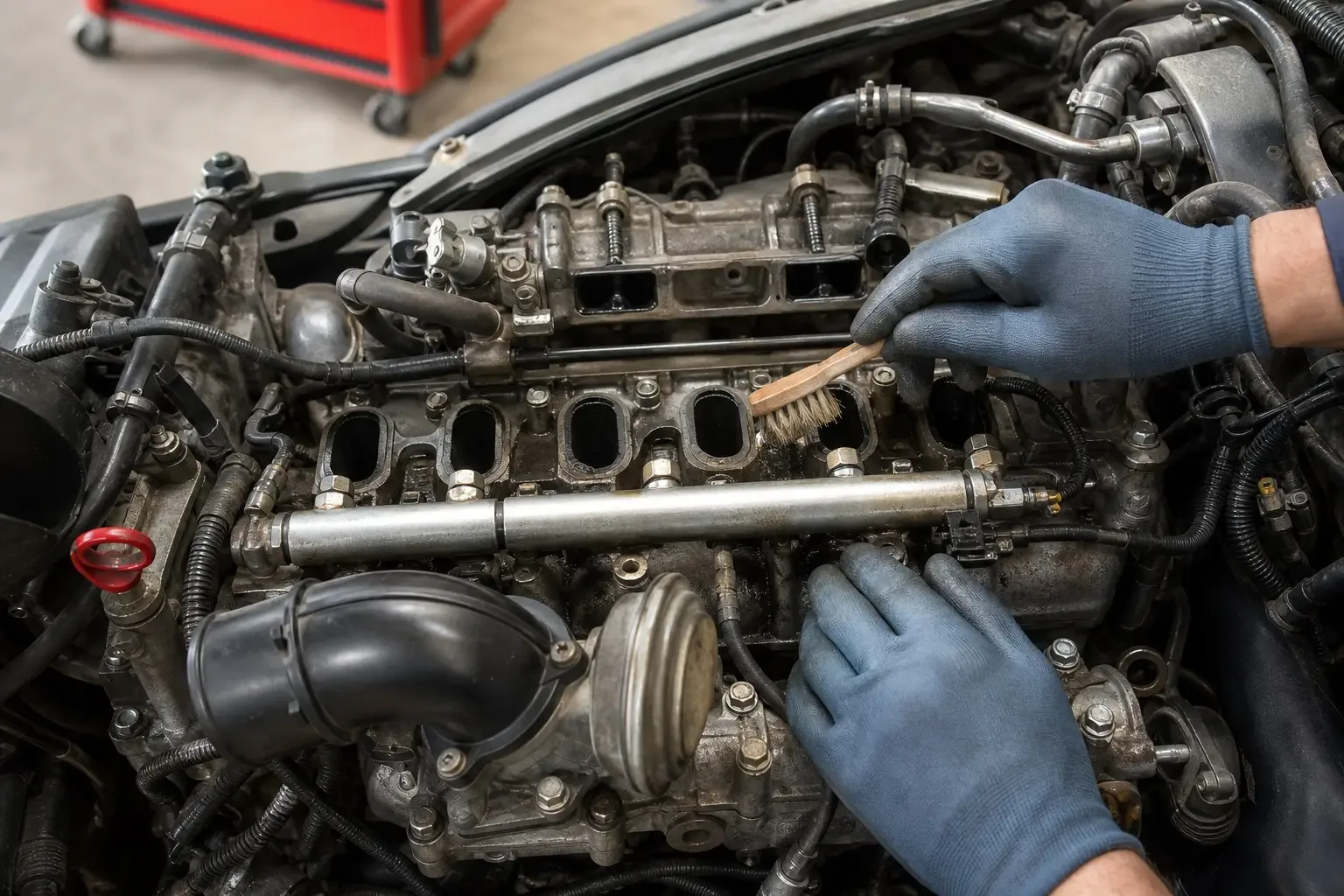
Symptoms
- A ticking or popping sound when cold that fades after warm-up, and an exhaust smell under the hood.
What's included
- Signs include characteristic ticking or popping when cold that quietens after warm-up, an exhaust smell under the bonnet and lambda-sensor faults caused by air leaks. Removal is the main difficulty: corrosion bonds the studs firmly into the head. We use heating and soaking, and drill out broken studs while restoring the threads. We install the manifold with new gaskets and fasteners, following the tightening sequence and torques.
Additional checks
- Lambda sensor fault codes caused by an air leak
- Condition of manifold mounting studs (corrosion, risk of breaking)
Why it matters
The hardest part is removal: over the years, corrosion fuses the studs to the head. Broken studs are drilled out and the threads restored, then the manifold is fitted with correct torque sequence.
More details
The exhaust manifold operates at the highest temperatures in the engine, so cracks appear in it over time and the studs seize and snap off. The signs are a characteristic tick or "popping" when cold that fades after warm-up, an exhaust smell under the hood, and lambda sensor fault codes caused by an air leak. The main difficulty in this job is removal: over years of corrosion the studs fuse with the head. We work with heating and penetrating fluid, and drill out any snapped studs and restore the threads. We install the manifold with new gaskets and hardware, following the correct sequence and tightening torques.
Need a Technician Consultation?
Describe the vehicle and symptoms, and we will suggest which check to start with.
Book a Diagnostic