
Manifold gasket replacement
A burnt manifold gasket is a common and underestimated fault.
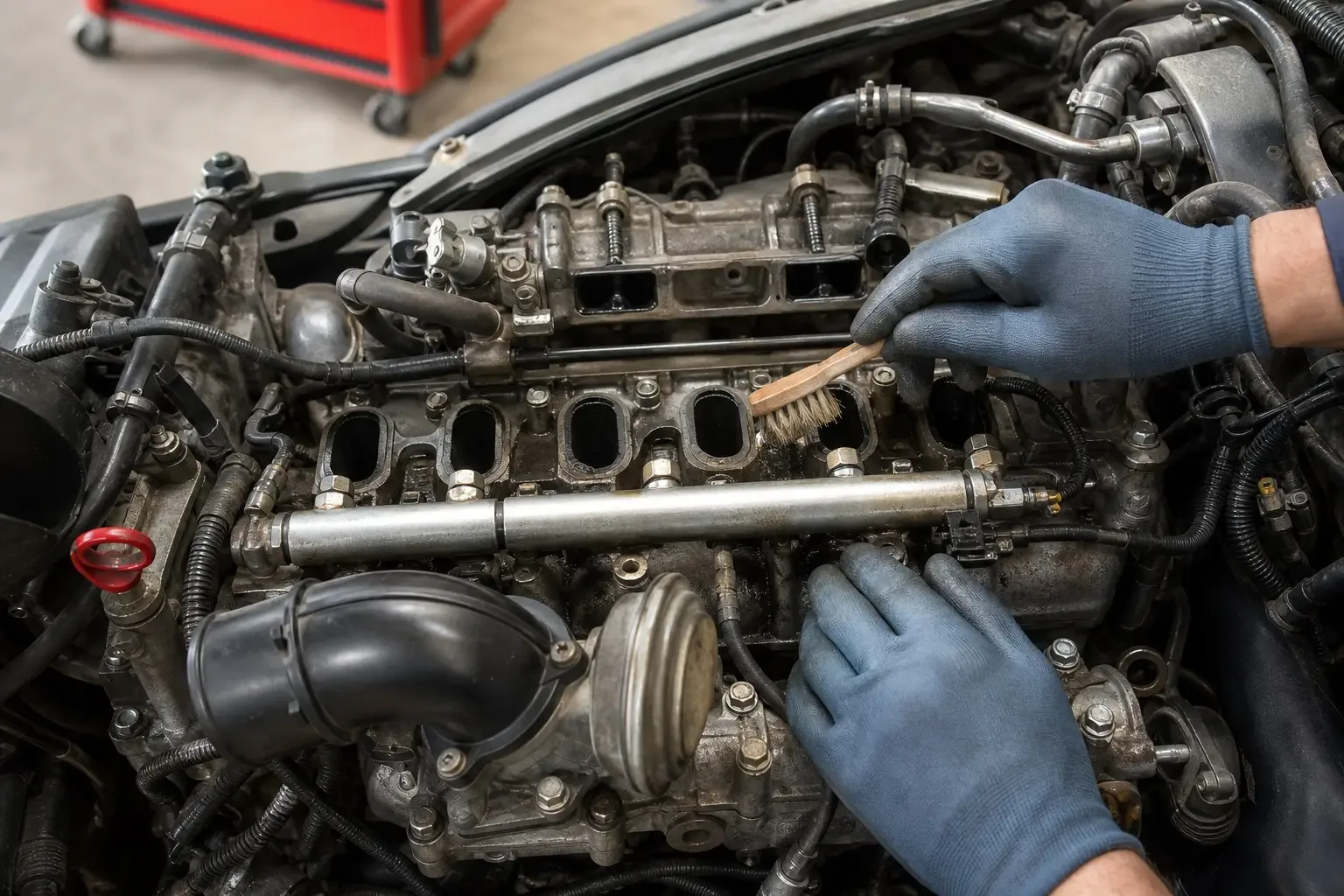
Symptoms
- Intake side: fluctuating idle and fuel-trim faults; exhaust side: ticking and an exhaust smell.
What's included
- On the intake side it admits unmetered air, causing a lean mixture, fluctuating idle and fuel-trim faults. On the exhaust side it produces a characteristic ticking noise and exhaust smell, while false oxygen-sensor readings upset the mixture. We locate leaks with a smoke tester, which is more reliable than listening for them. During replacement, we clean mating faces and check for distortion: a new gasket will not seal against a warped surface, wasting the work. Fasteners are tightened to the manufacturer’s torque.
Additional checks
- Lambda sensor readings for distortion caused by the air leak
- Manifold fastener torque to manufacturer specification
Why it matters
Leaks are found with a smoke machine — more reliable than listening. Mating surfaces are checked for warping: a new gasket won't seal on a warped surface, wasting the job.
More details
A burned manifold gasket is a common and underrated fault. On the intake side it causes unmetered air to be drawn in: the mixture leans out, idle fluctuates, and the control unit logs fuel trim faults. On the exhaust side a characteristic tick appears along with an exhaust smell, and the lambda sensor starts getting incorrect readings and throws off the mixture. We find the leak with a smoke machine — more reliable than listening for it. During replacement we clean the mating surfaces and check them for warping: a new gasket won't seal properly against a warped surface, and the job would be wasted. We tighten the hardware to the manufacturer's torque spec.
Need a Technician Consultation?
Describe the vehicle and symptoms, and we will suggest which check to start with.
Book a Diagnostic