Symptoms
- The body sits lower on one side, with reduced ride height.
- The suspension starts to bottom out over bumps.
What's included
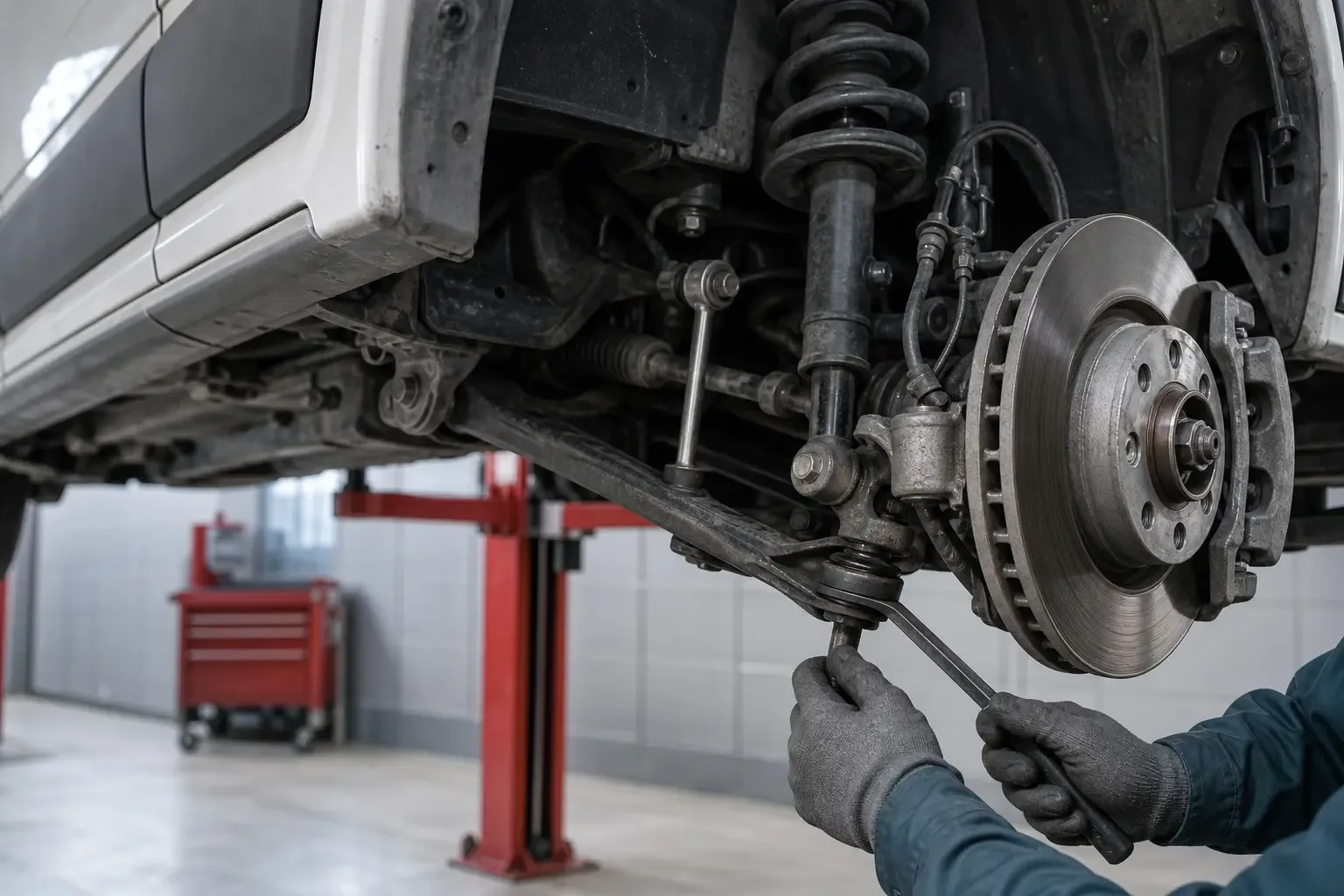
- Over time, metal fatigue causes the bar to sag and the body to sit lower, sometimes more on one side. Ground clearance falls, wheel angles change and the suspension starts bottoming out over bumps. We check ride height on both sides and spline connections, which often seize through corrosion. Removal uses a dedicated puller without impact loads to protect the arm and bracket. Afterwards, we adjust ride height to the model’s specification and always perform wheel alignment.
Additional checks
- Ride height on both sides
- Wheel alignment after installation
Why it matters
Splined joints often seize from corrosion, so removal without a dedicated puller risks damaging the control arm and bracket. Ride height is set to the specification for that model.
More details
A torsion bar works like a spring, twisting under load. Over time the metal fatigues, the torsion bar “settles,” and the body drops — more on one side than the other. Ground clearance decreases, wheel angles shift, and the suspension starts bottoming out over bumps. We check the ride height on both sides and the condition of the splined joints, which often seize from corrosion. Removal is done with a special puller, without impact loads, so as not to damage the arm and bracket. After installation we adjust the ride height to the spec for the specific model and always perform a wheel alignment.
Need a Technician Consultation?
Describe the vehicle and symptoms, and we will suggest which check to start with.
Book a Diagnostic