Suspension play check
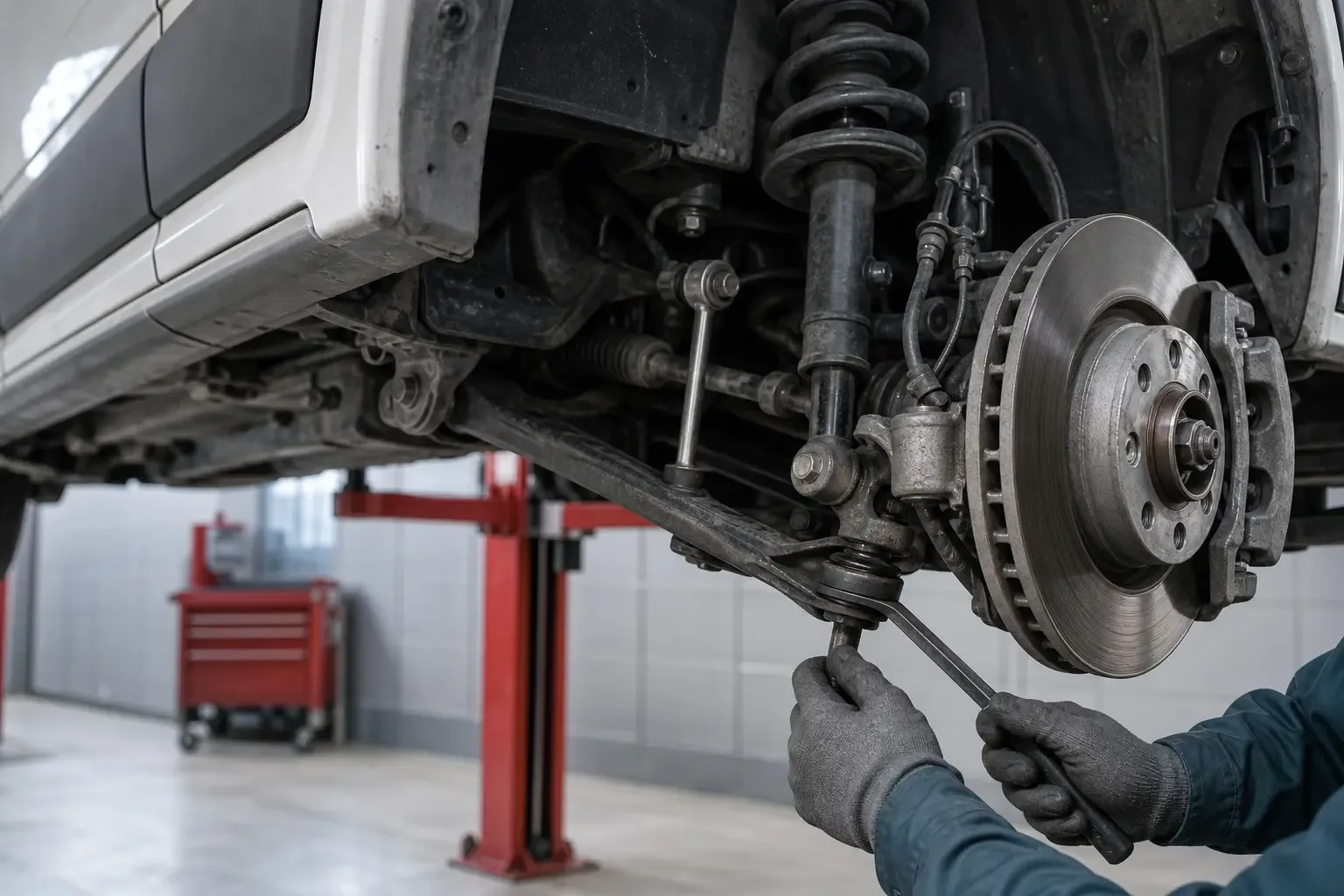
Play is clearance where none should exist: in a ball joint, steering end, suspension bush or wheel bearing.
Symptoms
- A new knock has appeared in the suspension over small bumps.
What's included
- At first it is almost unnoticeable; then a knock appears over small bumps, and eventually the part can fail while driving. We use a play detector: plates beneath the wheels move the suspension in different directions while the technician sees exactly which joint develops clearance. This is more precise than a pry-bar check and distinguishes a worn ball joint from a damaged suspension bush, even though the outward symptom is the same. We recommend combining a play check with a seasonal inspection and always carrying it out before wheel alignment.
Additional checks
- Play in the ball joint
- Play in the tie-rod end
- Play in the suspension bushes
- Play in the wheel bearing
Why it matters
A worn ball joint and a broken bushing show the same symptom from outside, but need different repairs. The source of the play can't be told by eye alone.
More details
Play is a gap where there shouldn't be one: in a ball joint, a tie rod end, a bushing, or a wheel hub bearing. At first it's barely noticeable, then a knock appears over small bumps, and eventually the part can fail while driving. We check for play on a play detector: plates under the wheels move the suspension in different directions, and the mechanic sees exactly which joint the gap is in. This is more accurate than checking with a pry bar and lets us tell a worn ball joint apart from a broken bushing — the symptom looks the same from outside, but the repair is different. We recommend checking for play together with a seasonal inspection, and it's mandatory before a wheel alignment.
Need a Technician Consultation?
Describe the vehicle and symptoms, and we will suggest which check to start with.
Book a Diagnostic