
Connecting rod replacement
The connecting rod joins the piston to the crankshaft and experiences tension and compression on every revolution.
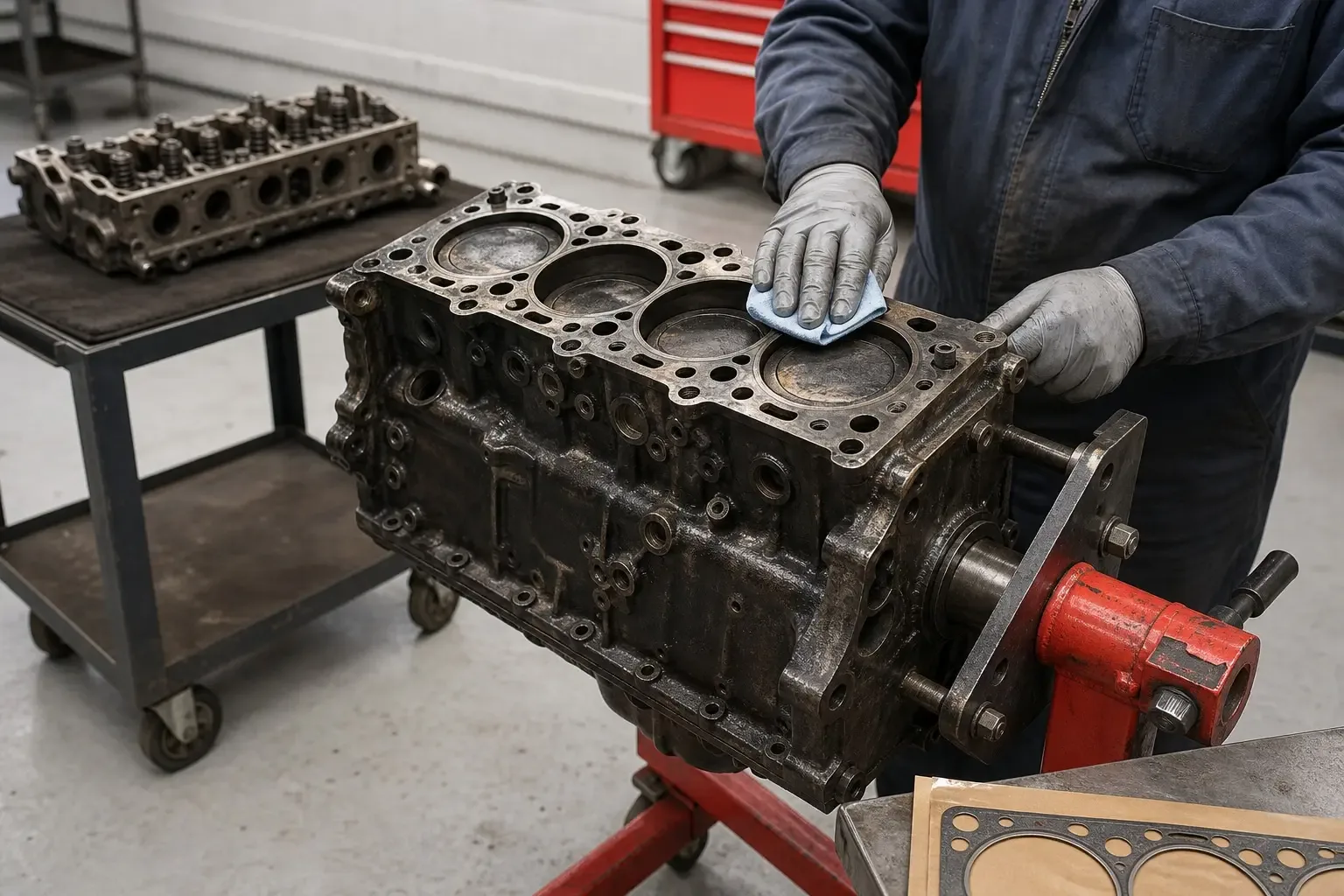
Symptoms
- The engine keeps burning oil after a repair because of a bent rod and a tilted piston.
What's included
- It is replaced for deformation, cracks, small-end bush wear or bearing-seat damage after a spun bearing. A bent rod often explains oil consumption after repair because the piston sits at an angle in the cylinder. We therefore check bore-axis parallelism and do not reinstall a part with questionable geometry. Rods are weight-matched within the manufacturer’s tolerance: unequal masses create vibration that damages bearings. Tightening torques are controlled during assembly.
Additional checks
- Checking small-end bushing wear
- Torque control during assembly
Why it matters
Rods are checked for axis parallelism, and a part with questionable geometry doesn't go back in. A weight difference beyond the manufacturer's tolerance creates vibration that damages bearing shells.
More details
The connecting rod links the piston to the crankshaft and works under tension and compression on every revolution. It's replaced for deformation, cracks, wear in the small-end bushing, or after a spun bearing has damaged the big-end bore itself. A bent rod is a common reason an engine keeps burning oil after a repair: the piston sits in the cylinder at an angle. That's why we check the rods for axis parallelism and never reinstall a part with questionable geometry. We match rods by weight within the manufacturer's tolerance — a mass difference creates vibration that kills bearings. Assembly is done with tightening torques checked.
Need a Technician Consultation?
Describe the vehicle and symptoms, and we will suggest which check to start with.
Book a Diagnostic