
Engine removal & installation
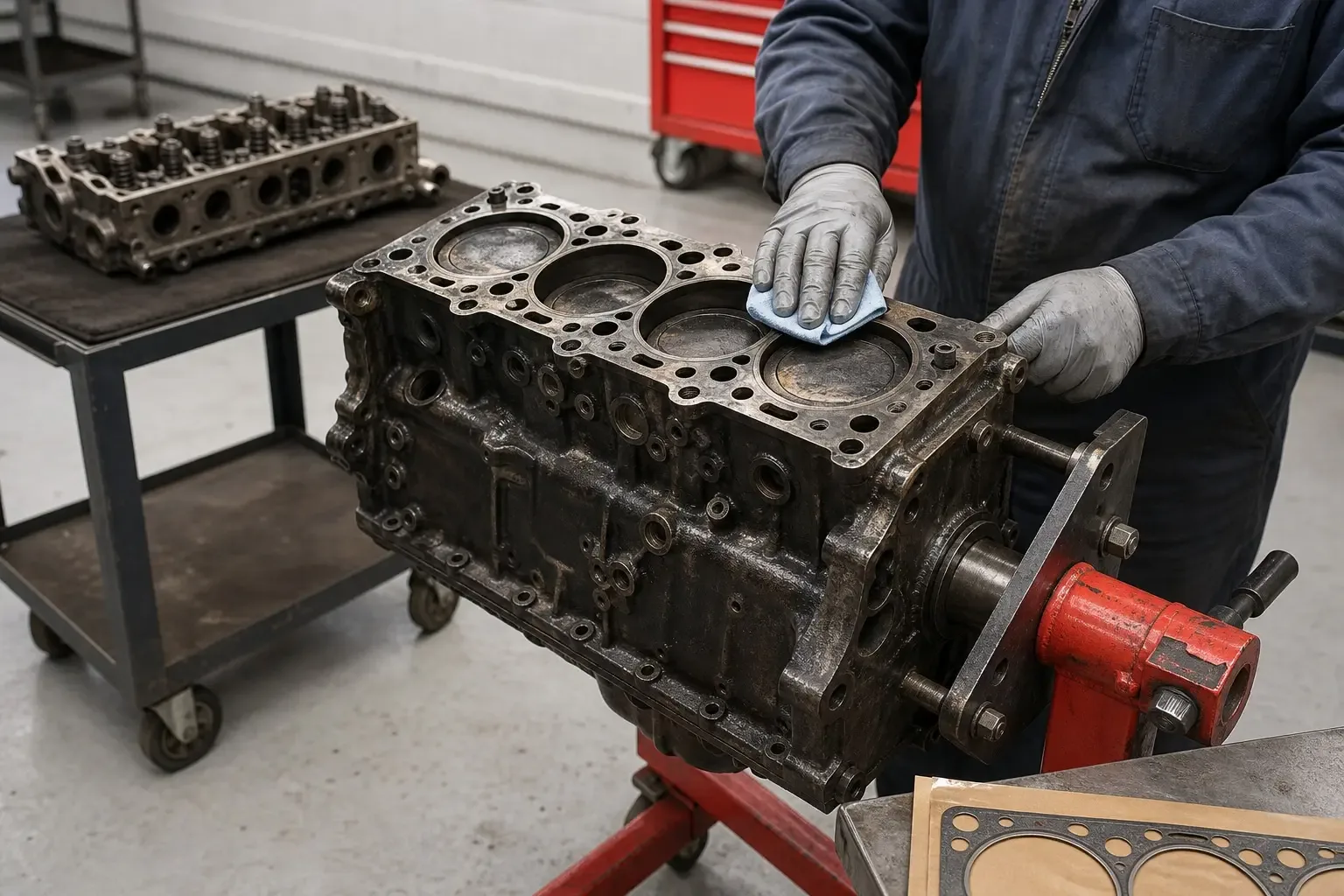
Engine removal is a separate job preceding major repair and is sometimes needed on its own, for example for clutch replacement on certain models, transmission repair or access to rear seals.
Symptoms
- Access is needed for a clutch replacement, gearbox repair, or the rear seals.
What's included
- The difficulty is avoiding damage to accessories, wiring and A/C lines during removal. We disconnect and label all connectors and remove the subframe where the design requires it. During installation, we check mount condition, tightening torques and correct engine position: a misaligned unit strains driveshafts, hoses and wiring.
Additional checks
- Labeling all connectors before disconnecting them
- Removing the subframe where the design requires it
- Checking mount condition and tightening torques during installation
Why it matters
During removal it's easy to damage ancillaries, wiring, and A/C lines. An engine installed at an angle puts strain on driveshafts, hoses, and wiring.
More details
Removing the engine is a separate job that precedes major repairs, and is sometimes needed on its own — for example, to replace the clutch on certain models, to repair the gearbox, or to access the rear seals. The difficulty is that it's easy to damage ancillary equipment, wiring, and A/C lines during removal. We remove the unit by disconnecting and labeling all connectors, and removing the subframe if the design requires it. During installation we check the condition of the mounts, the tightening torques, and the correct position of the engine: a misaligned engine puts strain on the driveshafts, hoses, and wiring.
Need a Technician Consultation?
Describe the vehicle and symptoms, and we will suggest which check to start with.
Book a Diagnostic