
Fuel pressure regulator replacement
The regulator keeps rail pressure stable regardless of engine operating mode.
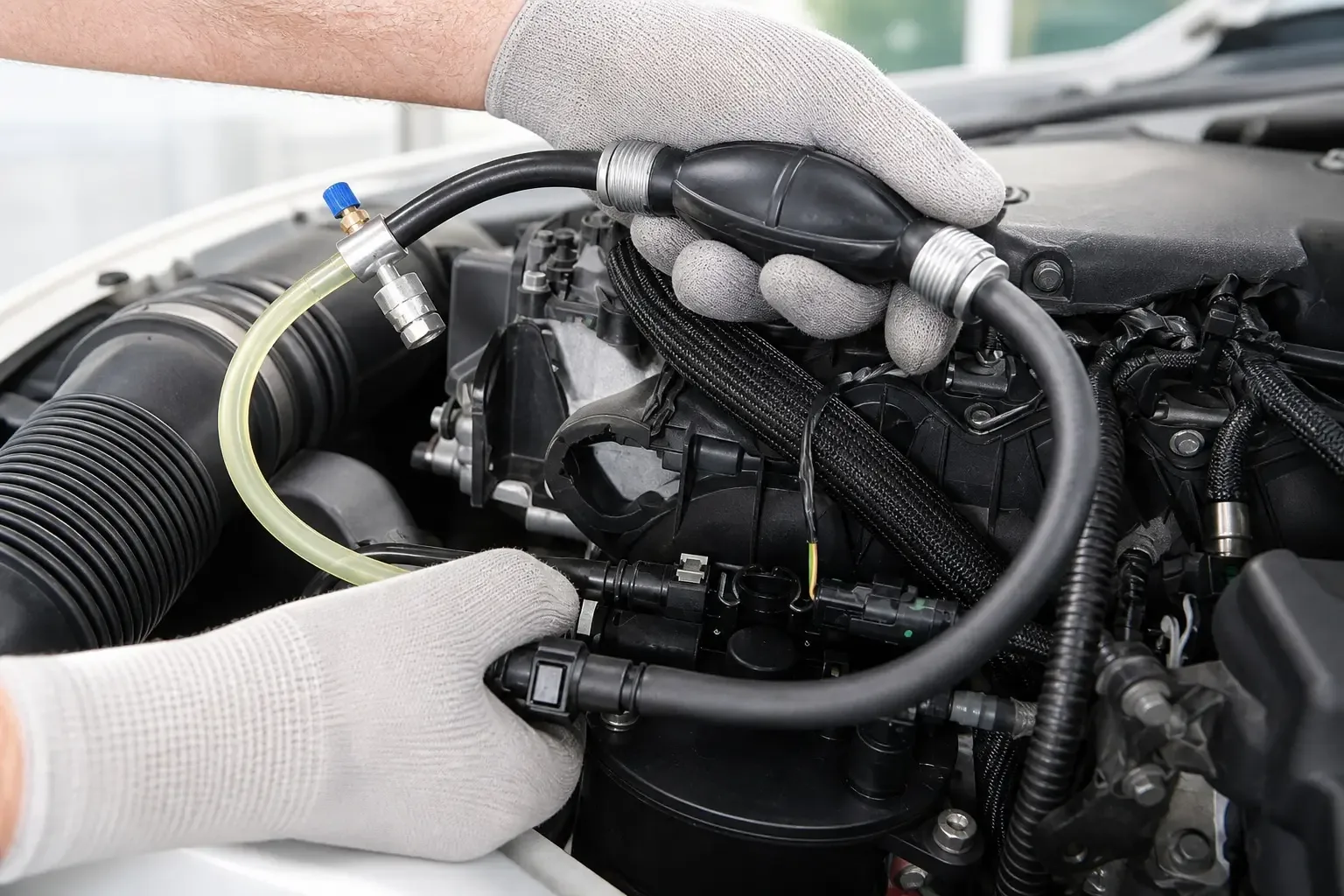
Symptoms
- Hesitation and hard starting from low pressure, or flooding, smoke, and fouled plugs from excess pressure.
What's included
- If it fails, pressure either drops, causing hesitation and difficult starting, or rises, causing overfuelling, smoke, flooded plugs and sharply higher consumption. Symptoms resemble pump or injector faults, so we start with gauge measurements in different modes, including checking whether pressure holds after the engine stops. This measurement identifies the cause. We use new seals during replacement, then remeasure pressure and check fuel trims in live data.
Additional checks
- Pressure holding after the engine stops — checked as a separate test
- New seals — fitted when replacing the regulator
- Pressure and fuel trims in live data — rechecked after replacement
Why it matters
The symptoms are easy to mistake for a pump or injector fault, so pressure is measured with a gauge across different conditions first. That measurement points to the actual culprit for certain.
More details
The pressure regulator keeps rail pressure stable regardless of how the engine is running. When it fails, pressure either drops — causing hesitation and hard starting — or rises, causing the engine to over-fuel, smoke, foul the spark plugs, and consume noticeably more fuel. The symptoms are easy to confuse with a faulty pump or injectors, so we start by measuring pressure with a gauge across different modes, including checking whether the system holds pressure after the engine is switched off. This kind of measurement points unambiguously to the culprit. Replacement is done with new seals, after which we re-measure the pressure and check the fuel trims in the live data.
Need a Technician Consultation?
Describe the vehicle and symptoms, and we will suggest which check to start with.
Book a Diagnostic