
Trailing arm replacement
Torque rods prevent the axle or beam from moving longitudinally and carry forces during acceleration and braking.
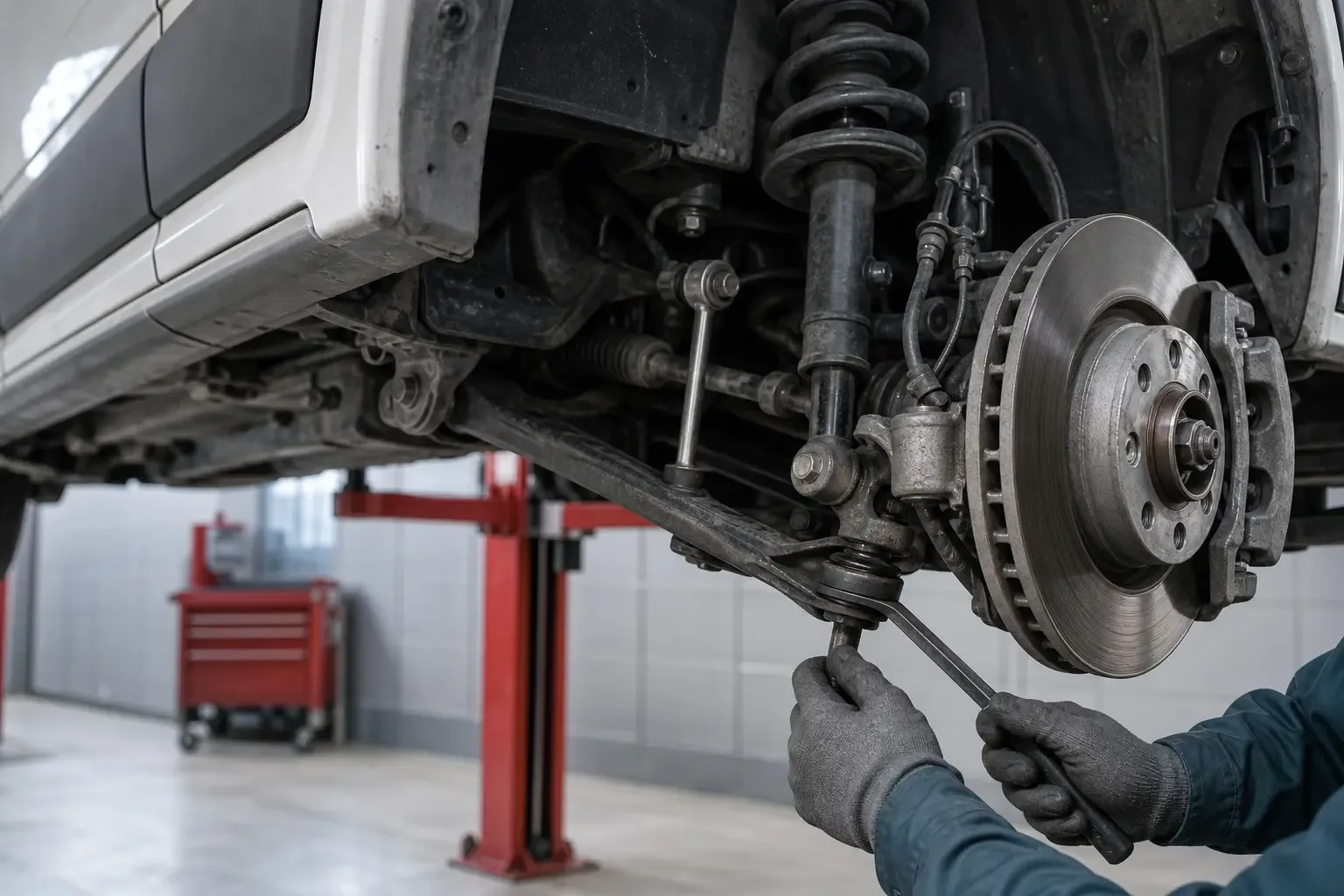
Symptoms
- The rear of the car feels disconnected, pulling within the lane grooves.
- A dull thud from the rear on gear changes, excess oversteer.
What's included
- When their bushes wear, the rear of the vehicle feels as though it moves independently: it follows road ruts, a dull rear knock accompanies gear changes and oversteer appears in corners. The defect is difficult to see without load, so we check the rods on a lift while rocking the assembly. We press in new bushes or replace the complete rod according to its design and metal condition. Fasteners are tightened with the suspension in its working position, otherwise the new rubber twists and tears prematurely.
Why it matters
The defect is hard to see without load, so the links are checked on a lift while rocking the assembly. Tightening is done with the suspension in its working position.
More details
Reaction rods (trailing links) keep the axle or beam from shifting lengthwise and take the forces during acceleration and braking. When their bushings wear out, it feels like the rear of the car is “living on its own”: the car pulls in ruts, a dull thud is heard at the back when shifting gears, and the car becomes over-responsive in corners. The fault is hard to see without load, so we check the rods on a lift while flexing the assembly. We replace either the bushings by pressing or the whole rod, depending on the design and the condition of the metal. Tightening is done with the suspension at normal ride height, otherwise the new rubber twists and tears quickly.
Need a Technician Consultation?
Describe the vehicle and symptoms, and we will suggest which check to start with.
Book a Diagnostic