
Piston ring replacement
Piston rings maintain compression and remove oil from the cylinder walls.
Symptoms
- The engine burns oil, smokes blue, and loses compression and power.
What's included
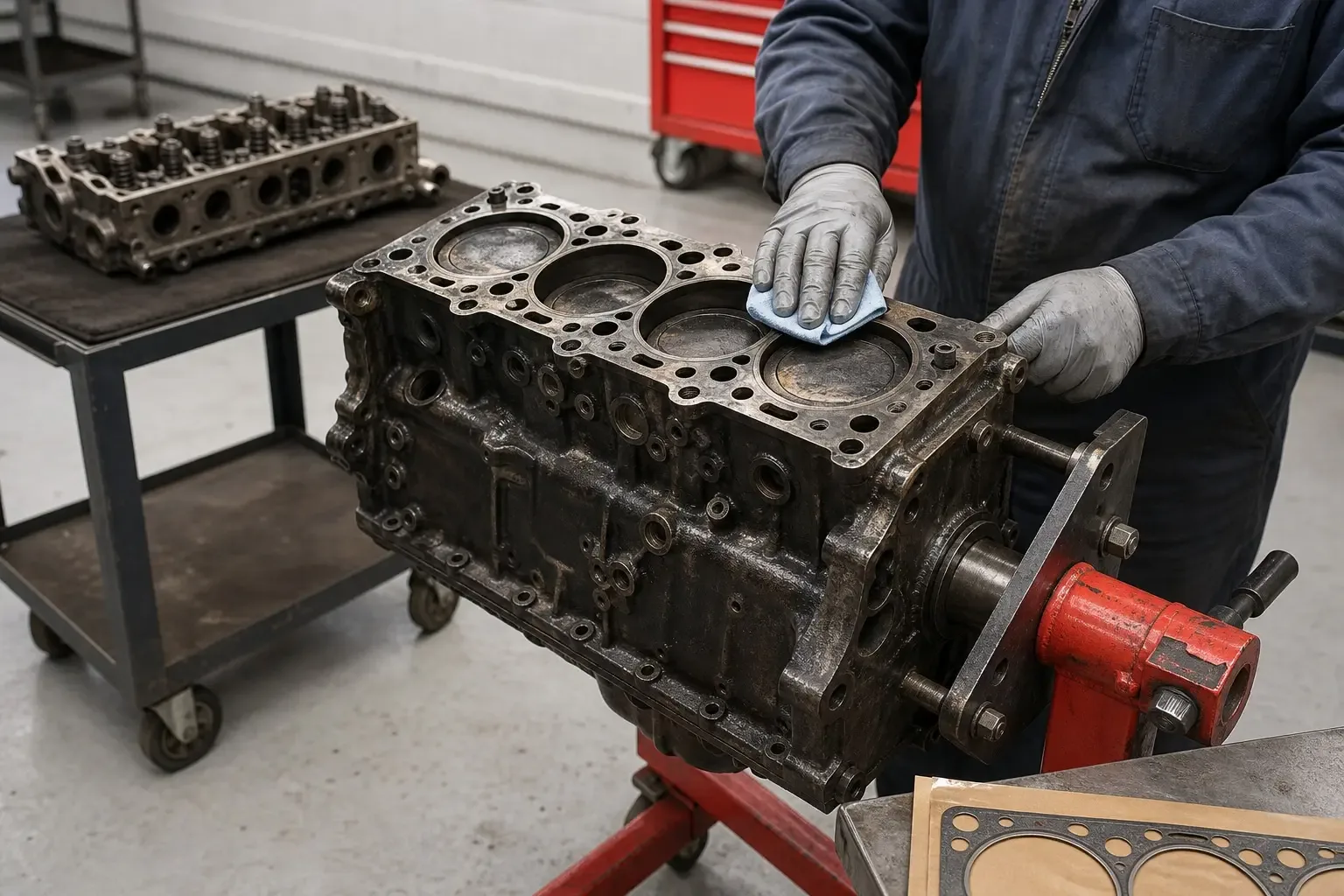
- When rings wear or become coked, the engine consumes oil, emits blue-grey smoke, loses compression and power, and crankcase gases force their way past seals. Before working, we measure the cylinders with a bore gauge: if there is wear or ovality, rings alone will not help and the block needs machining. It is important not to offer an inexpensive solution that will not work. During assembly, we check ring end gaps and their correct spacing around the circumference, then run in the engine and check oil consumption.
Additional checks
- Measuring the cylinders with a bore gauge beforehand
- Checking ring end gaps and their spacing around the circumference
- Running in the engine and checking oil consumption
Why it matters
If the cylinder is worn oval, new rings alone won't help — the block needs machining. This is a case where promising a cheap fix that won't work isn't an option.
More details
Piston rings provide compression and scrape oil off the cylinder walls. When they wear out or get coked up, the engine starts burning oil, smokes blue, loses compression and power, and blow-by breaks through the seals. Before the work we measure the cylinders with a bore gauge: if there's wear and ovality, new rings alone won't help — the block needs machining. This is a job where it's important not to promise the customer a cheap fix where one won't work. During assembly we check the ring end gaps and the correct staggering of the gaps around the circumference, then run the engine in and check oil consumption.
Need a Technician Consultation?
Describe the vehicle and symptoms, and we will suggest which check to start with.
Book a Diagnostic