
Strut bearing replacement
The strut bearing allows the strut to rotate as the steering wheel turns.
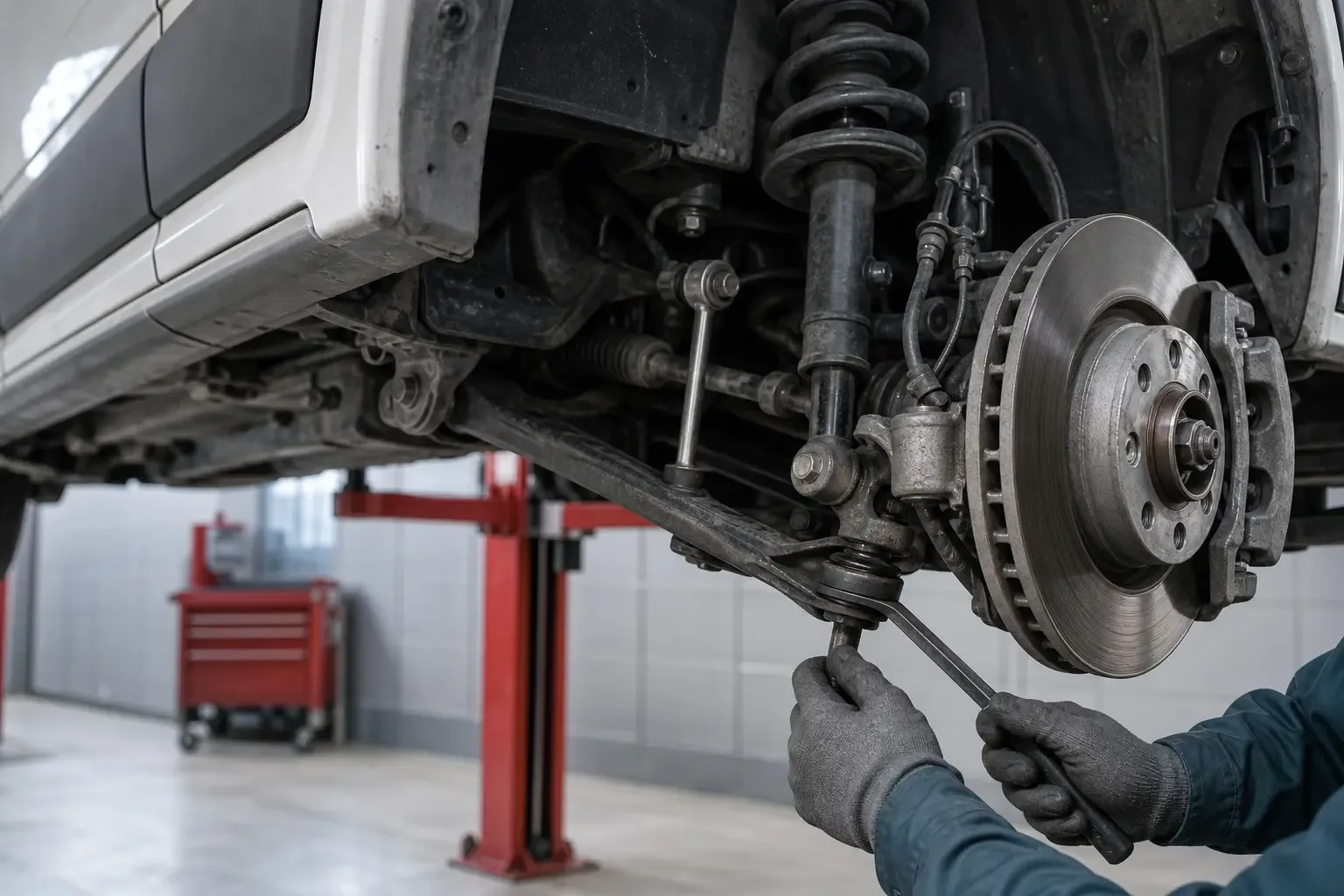
Symptoms
- The steering becomes stiff, with a crunch or click when turning.
- An extra knock appears over bumps.
What's included
- When worn, it makes steering stiff, produces crunching or clicking while turning and adds knocking over bumps. We check the bearing together with the mount: on most vehicles it makes sense to service the assembly as a set, since dismantling the strut again costs more than the part itself. We work in Kyiv using our own equipment: remove the strut, compress the spring on the stand, replace the bearing and reassemble with controlled tightening torques. Afterwards, we always check wheel-alignment angles because dismantling the strut affects them.
Additional checks
- Spring compression on the stand
- Controlled tightening torques during assembly
Why it matters
It makes sense to service the bearing and mount together, since disassembling the strut a second time costs more than the part itself. Wheel alignment is checked after replacement.
More details
The strut bearing lets the strut rotate together with the steering wheel. When it fails, the steering becomes stiff, a creak or clicking is heard when turning, and an extra knock appears over bumps. We check the bearing together with the mount: on most cars this is an assembly that makes sense to service as a set, because disassembling the strut again costs more than the part itself. We do the work in Kyiv with our own equipment: we remove the strut, compress the spring on a stand, replace the bearing, and reassemble the unit while checking tightening torques. After replacement we always check the wheel alignment angles, because disassembling the strut affects them.
Need a Technician Consultation?
Describe the vehicle and symptoms, and we will suggest which check to start with.
Book a Diagnostic