
Tie rod replacement
A steering tie rod connects the rack to the tie-rod end and transfers force to the wheel.
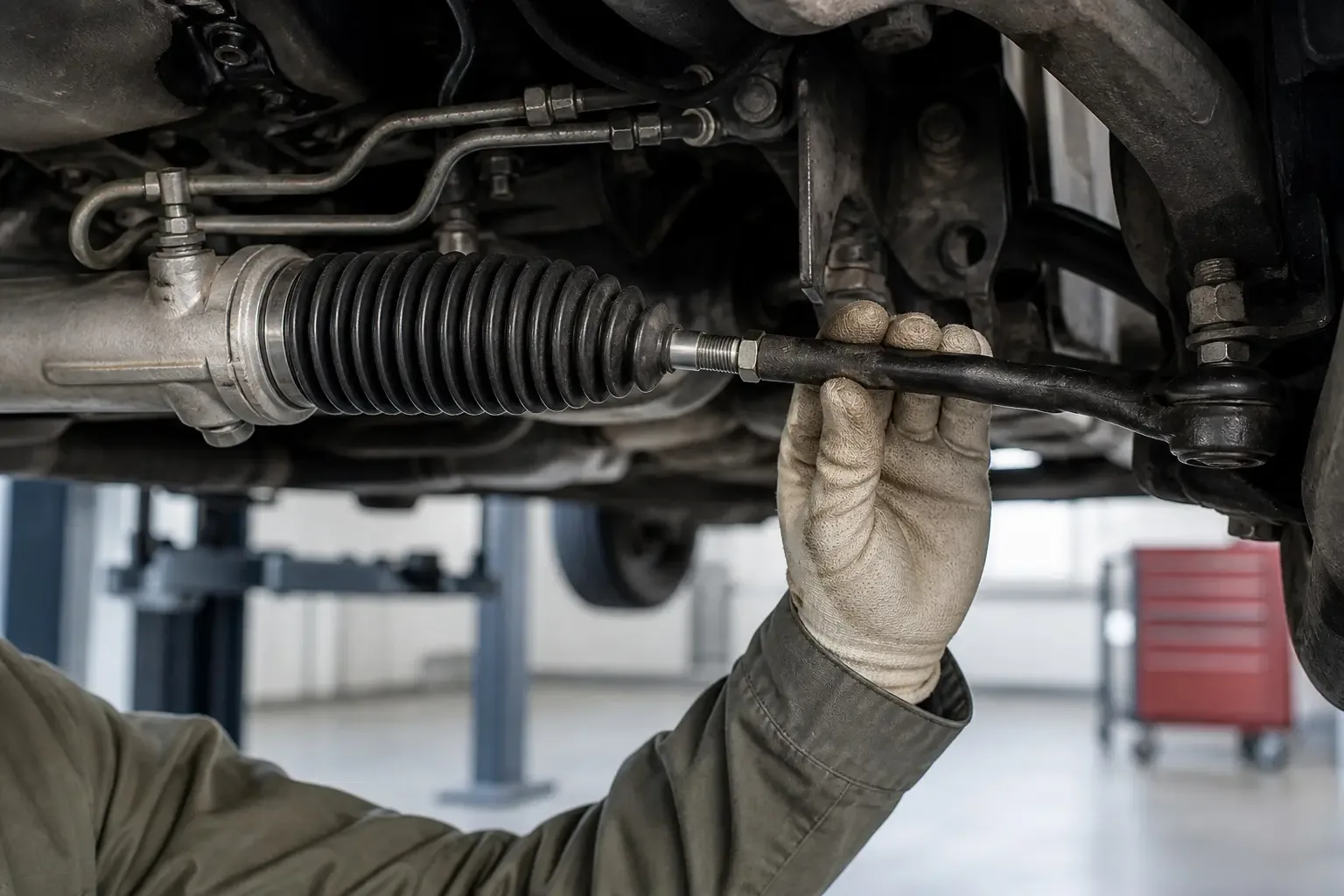
Symptoms
- Slight steering play, then knocking over bumps and vagueness driving straight.
What's included
- Its inner joint develops play gradually: first there is slight steering free play, then knocking over bumps and uncertainty in a straight line, requiring constant correction. We check the rod on a play detector because this clearance is often impossible to feel by hand, especially with a sound tie-rod end. The rod is replaced with the end removed, and we always inspect the rack boot, which is almost always damaged with a worn rod. Wheel alignment is performed afterwards; without it, the new rod is set by guesswork and the vehicle will wear its tyres.
Why it matters
Play is checked on a play detector, since it's often not felt by hand, especially with a good tie-rod end. Without an alignment, the new rod is set by guesswork and the car will chew through tires.
More details
The tie rod connects the rack to the tie rod end and transfers force to the wheel. Its inner joint wears down gradually: first a slight play appears in the steering wheel, then a knock over bumps and vagueness in a straight line — you have to keep correcting the car's course. We check the rod on a play detector, because this gap often can't be felt by hand, especially if the tie rod end is still fine. We replace the rod with the tie rod end removed and always inspect the rack boot — with a worn rod it's almost always damaged too. After replacement we perform a wheel alignment: without it the new rod is set "by eye" and the car will eat through tires.
Need a Technician Consultation?
Describe the vehicle and symptoms, and we will suggest which check to start with.
Book a Diagnostic