
Cylinder head resurfacing
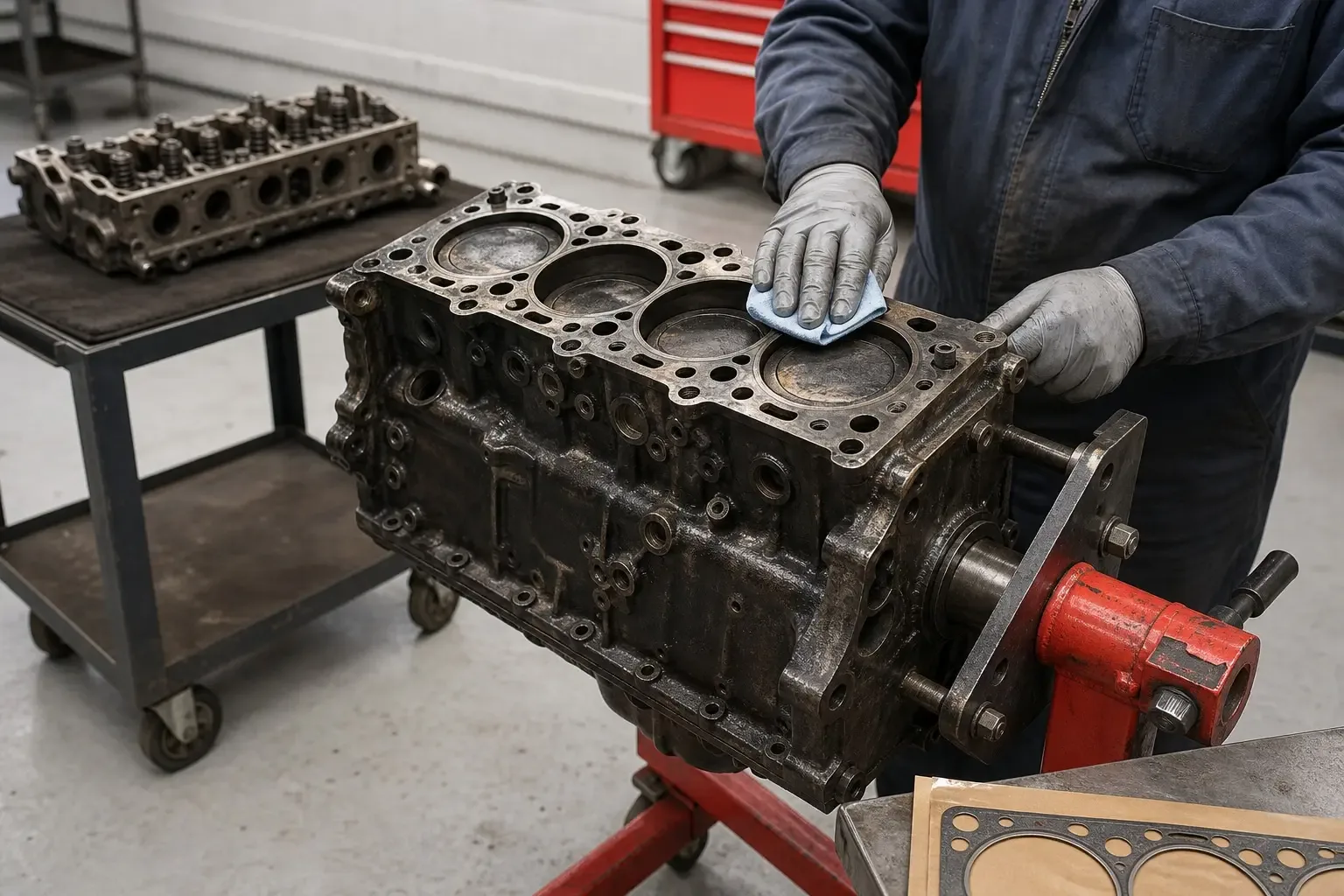
After overheating, the cylinder head can warp: its face is no longer flat and even a new gasket cannot seal it, allowing gases into the cooling jacket and antifreeze into the cylinder.
Symptoms
- After overheating, even a new head gasket won't seal: combustion gases enter the cooling jacket.
What's included
- Before fitting a gasket, we check the face with a straightedge and feeler gauge. If deviation exceeds tolerance, the head is resurfaced. Metal may be removed only within the manufacturer's limit, because excessive machining changes compression ratio and chamber geometry. We pressure-test before machining; resurfacing a cracked head is pointless. The result is checked and assembly uses new seals.
Additional checks
- Checking the face with a straightedge and feeler gauge
- Checking the result after machining
- Assembly with new seals
Why it matters
Metal can only be removed within the manufacturer's allowance: over-grinding changes the compression ratio and chamber geometry. Grinding a cracked head is pointless, so pressure testing comes first.
More details
After overheating, the head warps — the surface is no longer flat, and even a new gasket can't seal it: combustion gases blow into the coolant jacket, and coolant ends up in the cylinder. That's why before fitting a gasket we always check the surface flatness with a straightedge and feeler gauge. If the deviation exceeds tolerance, the head needs grinding. An important detail: metal can only be removed within the limits allowed by the manufacturer — excessive grinding changes the compression ratio and combustion chamber geometry. Before machining we pressure-test the head: there's no point grinding a cracked head. After machining we check the result and reassemble with new seals.
Need a Technician Consultation?
Describe the vehicle and symptoms, and we will suggest which check to start with.
Book a Diagnostic