
CV joint replacement
A CV joint transmits rotation to the wheel while it steers and the suspension moves.
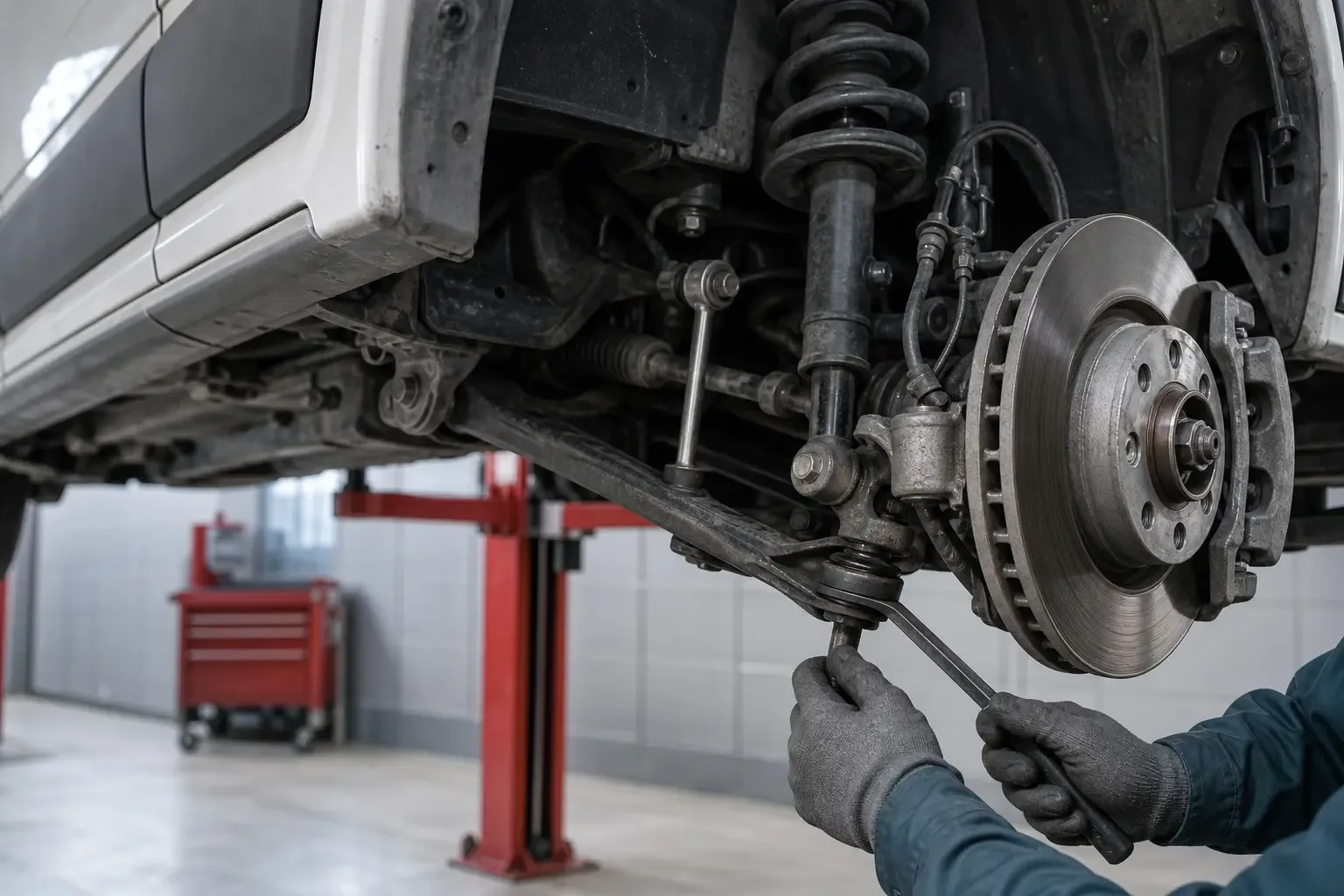
Symptoms
- A crunch in a turn under load.
- Vibration on acceleration.
What's included
- The classic sign of a faulty outer CV joint is crunching in a turn under load; an inner joint more often causes vibration during acceleration. The cause is almost always a torn boot that lets grease wash out and sand enter. We inspect both joints and boots and determine which can be saved with fresh grease and a new boot and which need replacement. We install the CV joint while checking circlip seating and always road-test the vehicle after repair.
Additional checks
- Circlip seating
- Road test after the repair
Why it matters
The cause is almost always the same: a torn boot that let the grease wash out and let sand in. Not every joint showing wear needs full replacement.
More details
A CV joint (constant velocity joint) transmits rotation to the wheel through steering angles and suspension travel. The classic sign of a failing outer CV joint is crunching in a turn under load; the inner one more often shows up as vibration on acceleration. Almost always the cause is the same: a torn boot that let the grease wash out and let sand in. We inspect both joints and boots, determine what can be saved by replacing the boot and grease, and what already needs replacing. We install the CV joint with the retaining ring seated and checked, and we always test-drive the car after the repair.
Need a Technician Consultation?
Describe the vehicle and symptoms, and we will suggest which check to start with.
Book a Diagnostic