
Coolant hose replacement
Cooling-system hoses undergo constant heating and cooling under pressure, so their rubber gradually hardens, cracks and separates internally.
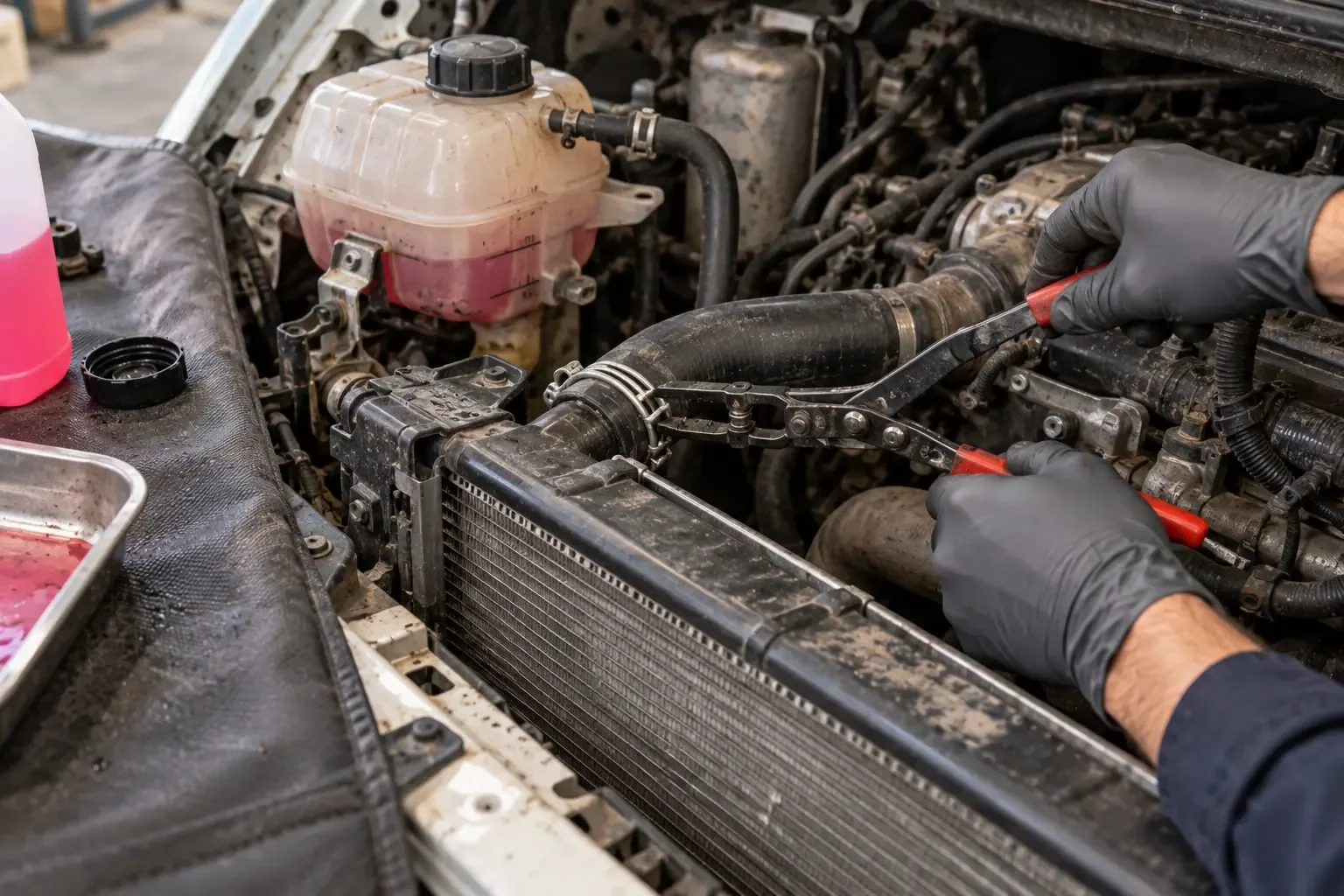
Symptoms
- The hose rubber stiffens and cracks outside, though it can already be delaminating unseen inside.
What's included
- The danger is that a hose may look intact outside while already delaminating inside: a piece of rubber breaks loose and blocks circulation, causing the engine to boil without warning. During cooling-system work, we visually inspect and feel every hose and check clamps and mounting surfaces. We fit new clamps with replacement hoses, then pressure-test and bleed the system. Old, hardened rubber is a reason to replace a hose before a journey.
Additional checks
- Checking the condition of clamps and mounting surfaces
- Pressure-testing the system and bleeding air after replacement
Why it matters
A piece of delaminated rubber can tear loose and block circulation, and the engine then boils over without warning. Hoses are inspected and felt by hand with every cooling-system job.
More details
Cooling system hoses work through a constant heat-cool cycle and under pressure, so the rubber hardens, cracks, and delaminates internally over time. The danger is that a hose can look fine on the outside while it's already delaminated inside — a piece of rubber tears loose and blocks the flow, and the engine boils over without warning. We inspect and feel every hose whenever we work on the cooling system, and check the condition of the clamps and mounting points. We replace them with new clamps, then pressure-test the system and bleed the air. Hardened old rubber is a reason to replace a hose before a trip, not after.
Need a Technician Consultation?
Describe the vehicle and symptoms, and we will suggest which check to start with.
Book a Diagnostic