
Expansion tank replacement
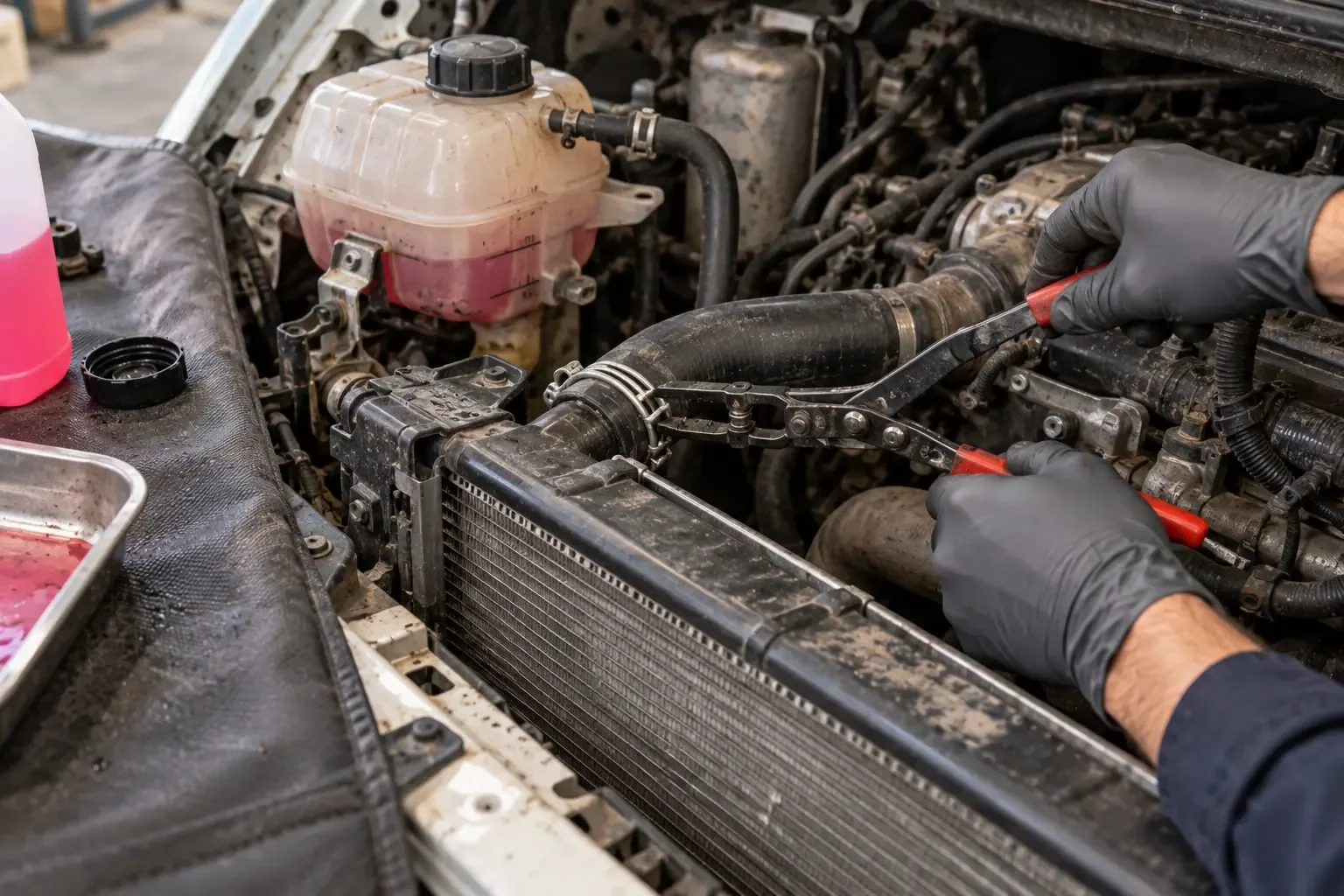
The expansion tank accommodates the thermal expansion of antifreeze and maintains operating pressure in the system.
Symptoms
- Boiling over at normal temperature, leaking, coolant disappearing with no visible trace.
What's included
- The plastic ages and cracks along seams, while the cap valve gradually stops working correctly, upsetting system pressure. This causes boiling at a normal temperature, leaks or unexplained antifreeze loss. We pressure-test the tank and cap separately from the rest of the system: often only the cap needs replacement. During replacement, we flush out any oil or grease contamination, fill with fresh antifreeze and test sealing at operating pressure.
Why it matters
The tank and cap are pressure-tested separately — often it turns out the cap needs replacing, not the tank. Replacement includes flushing out any oil residue that made its way in.
More details
The expansion tank absorbs the thermal expansion of the coolant and keeps the system at operating pressure. The plastic ages and cracks along the seams, and the cap eventually stops holding its valve pressure — leaving the system running at the wrong pressure. This shows up as boiling over at a normal temperature, leaking, or coolant disappearing with no visible trace. We test the tank and cap separately from the rest of the system under pressure — it often turns out that the cap needs replacing, not the tank. During replacement we flush the system of any grease or oil residue that got in, refill with new coolant, and check for leaks at operating pressure.
Need a Technician Consultation?
Describe the vehicle and symptoms, and we will suggest which check to start with.
Book a Diagnostic