
Air compressor replacement
The compressor supplies air to the air-suspension system.
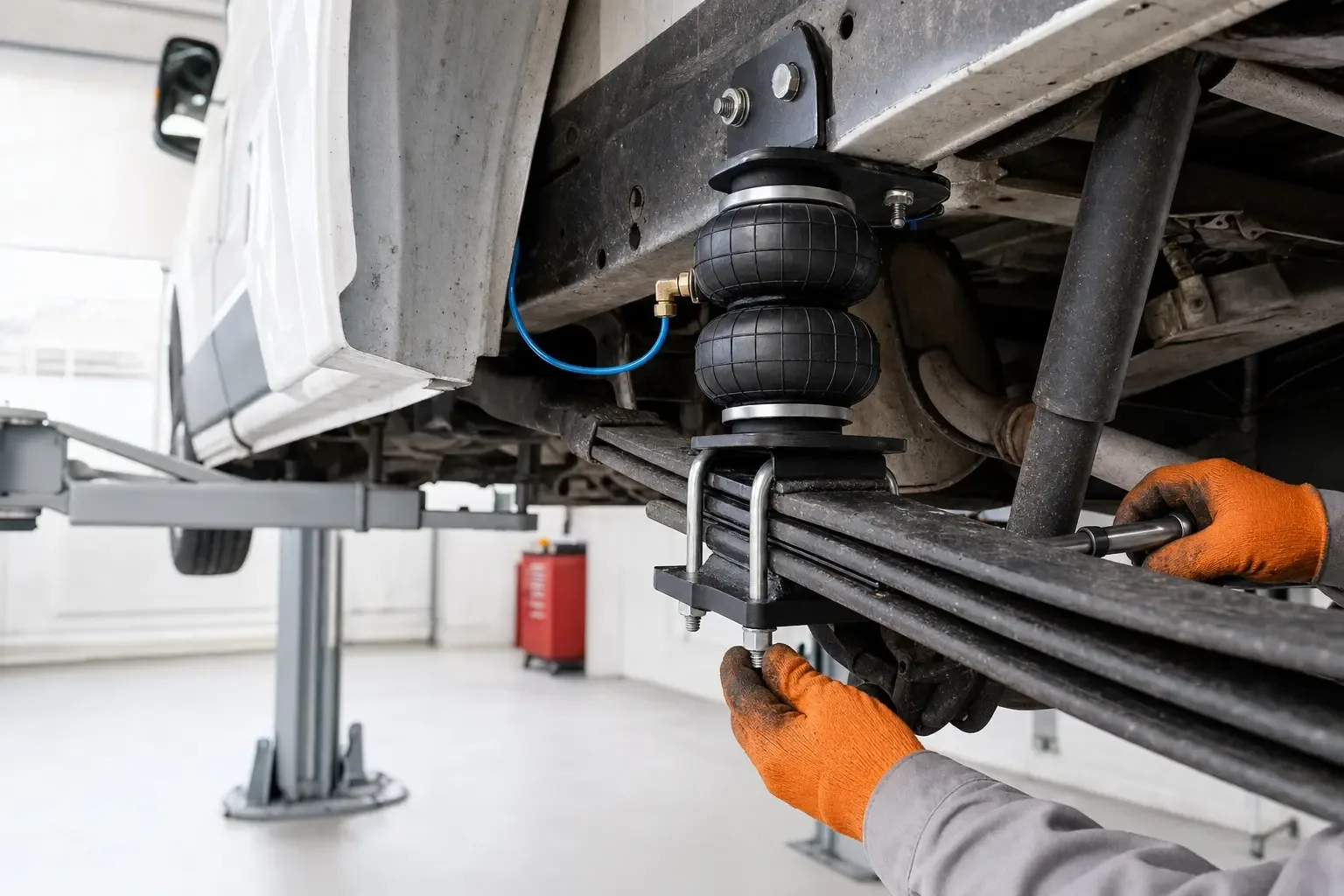
Symptoms
- The suspension rises very slowly or not at all, the compressor whines and shuts off from overheating.
What's included
- It usually does not fail on its own but through overload: when the system has a leak, the compressor runs almost continuously, overheats and wears out. We therefore first check system sealing, otherwise the new unit will share the old one’s fate. Fault signs include suspension that rises very slowly or not at all, a humming compressor, thermal cut-out and a dashboard fault. Replacement is accompanied by replacing the dryer and checking the relay and wiring. We calibrate the system after installation.
Additional checks
- Dashboard fault code
- Compressor relay and wiring
- System calibration after installation
Why it matters
The compressor rarely fails on its own — usually it's overloaded by a leak elsewhere in the system. The system is checked for leaks first, or a new unit will meet the same fate.
More details
The compressor pumps air into the air suspension system. It usually doesn't fail on its own but from overload: if the system has a leak, the compressor runs almost continuously, overheats, and wears out. So the first thing we check is the system for leaks — otherwise a new unit will repeat the old one's fate within a few months. Signs of failure include the suspension rising very slowly or not at all, the compressor humming, shutting off on overheat protection, and a fault code appearing on the dashboard. Replacement is accompanied by replacing the dryer and checking the relay and wiring. After installation we perform a system calibration.
Need a Technician Consultation?
Describe the vehicle and symptoms, and we will suggest which check to start with.
Book a Diagnostic