
CV boot replacement
Timely replacement of an inexpensive CV boot helps save the much more costly joint.
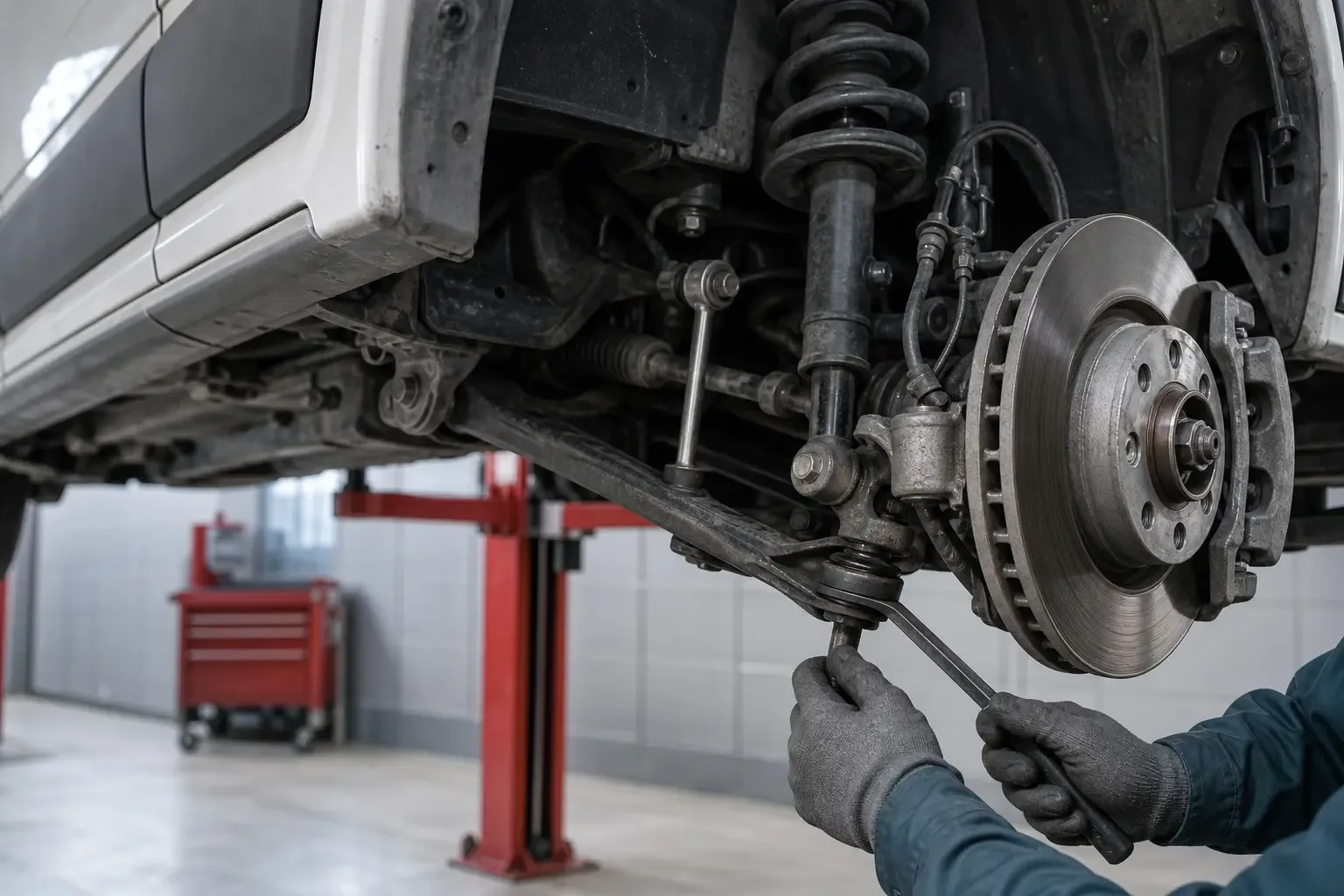
Symptoms
- Grease spatter on the wheel arch and nearby suspension parts.
- A tear has appeared in the boot.
What's included
- Rubber cracks through ageing, road chemicals and temperature; once torn, centrifugal force throws grease out while sand and water enter, quickly damaging the joint during active driving. The sign is grease splashed on the wheel arch and nearby suspension parts. We remove the driveshaft, wash the joint, inspect tracks and cage, pack it with fresh grease of the correct type and install the boot with suitable clamps. If the joint already crunches, we explain plainly that a new boot will not restore it.
Additional checks
- Condition of the joint's tracks and cage
- Type of grease packed into the joint
- Boot clamps
Why it matters
As soon as a tear appears, the grease is thrown out and sand and water get in — the joint then fails within weeks. If the CV joint is already crunching, a new boot alone won't help.
More details
A CV joint boot costs next to nothing, and replacing it in time saves the joint itself, which costs many times more. The rubber cracks from age, road salt, and temperature; as soon as a tear appears, centrifugal force throws out the grease and sand and water get in — after that the joint fails within a few weeks of regular driving. The sign is simple: oil splatter on the wheel arch and suspension parts near the wheel. We remove the driveshaft, flush the joint, assess the condition of the races and cage, pack in new grease of the correct type, and fit the boot with the correct clamps. If the joint has already started crunching, we'll tell you honestly that a boot won't save the situation.
Need a Technician Consultation?
Describe the vehicle and symptoms, and we will suggest which check to start with.
Book a Diagnostic