
Gearbox mount replacement
The transmission mount works with the engine mounts and absorbs torque reaction during acceleration.
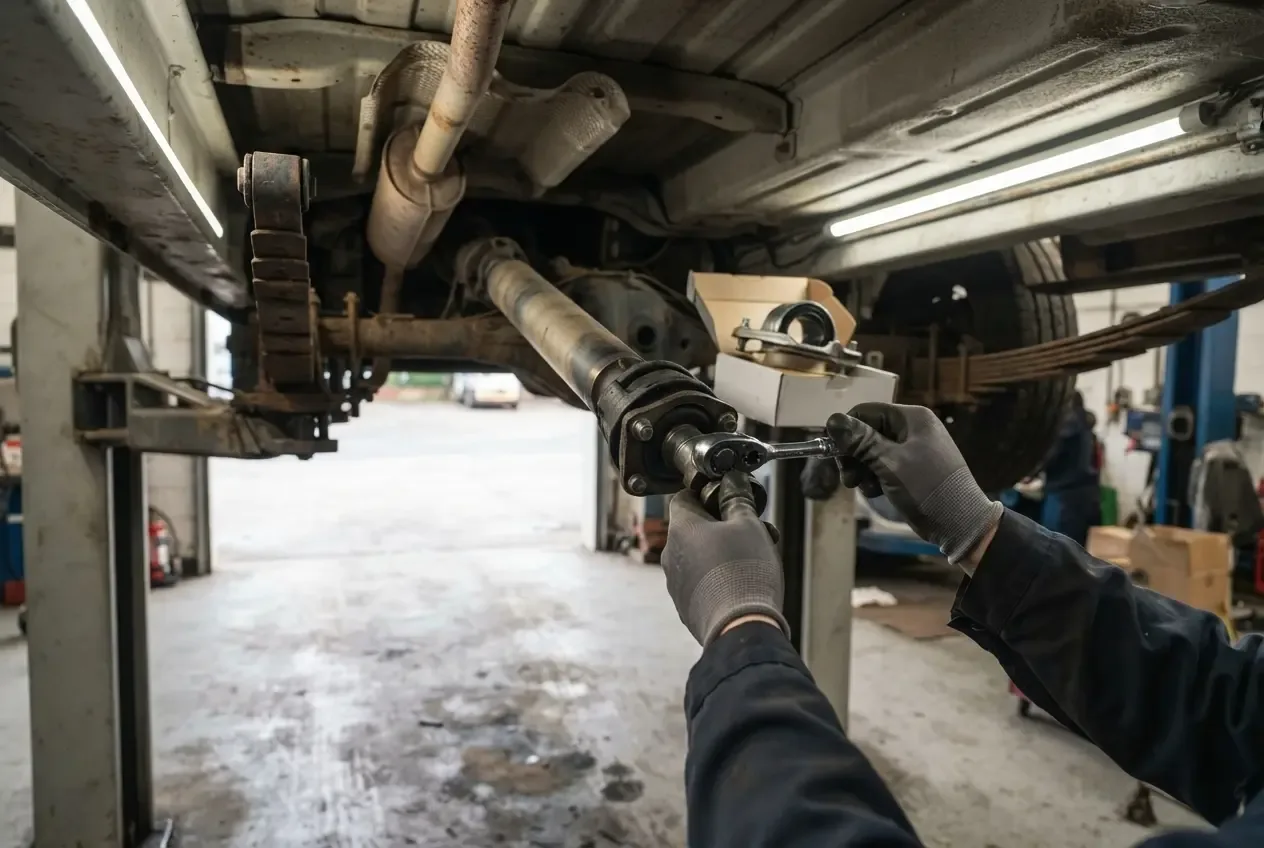
Symptoms
- A jolt when shifting gears, vibration at idle, a knock when reversing.
What's included
- Wear produces recognisable symptoms: a knock or jolt during gear changes, vibration at idle and sometimes knocking when moving off in reverse. Drivers often blame the transmission itself and expect an expensive repair, although the actual cause is a rubber component. We test the mount under load and assess neighbouring mounts and fasteners. During replacement, we support the unit to avoid damaging driveshafts and hoses, then tighten the fasteners in the working position. We road-test the vehicle after repair.
Additional checks
- Checking the mount under load and the condition of neighbouring mounts and fasteners
- Tightening fasteners with the unit in its working position
- Test-driving the vehicle after repair
Why it matters
Drivers often blame the gearbox itself and brace for an expensive repair, when the real cause is a rubber part. Replacement is done with the unit supported, to avoid damaging driveshafts and hoses.
More details
The transmission mount works together with the engine mounts and absorbs the reaction torque on acceleration. Its wear produces a recognizable symptom: a thud or jolt when shifting gears, vibration at idle, and sometimes a knock when setting off in reverse. Drivers often blame this on the transmission itself and brace for an expensive repair, when the real cause is a rubber component. We check the mount under load and assess the condition of the neighboring mounts and hardware. Replacement is done with the unit supported, to avoid damaging the driveshafts and hoses, and the hardware is tightened at normal ride height. After the repair we test-drive the car.
Need a Technician Consultation?
Describe the vehicle and symptoms, and we will suggest which check to start with.
Book a Diagnostic