
Drive shaft (axle) replacement
A driveshaft transfers torque from the transmission to the wheel.
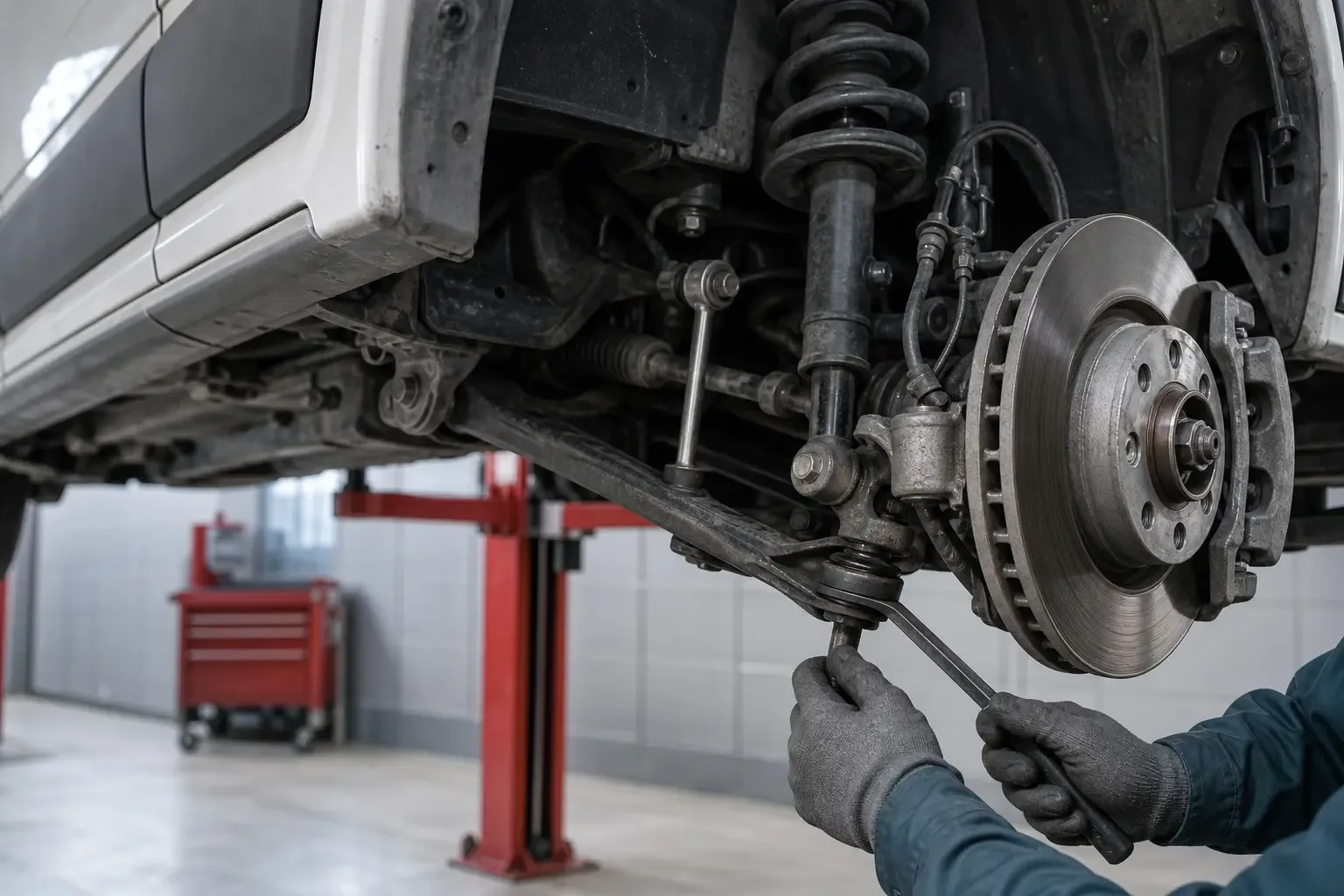
Symptoms
- Shuddering on acceleration, vibration, or a crunch in turns.
What's included
- It is replaced for judder under acceleration, vibration, crunching in corners, worn splines or a shaft bent by an impact. Often only the CV joint needs replacement; we assess this on site because a complete shaft costs considerably more. Before working, we check the transmission seals: they often start leaking after shaft removal, so replacing them immediately avoids repeating the work. After installation, we check transmission oil level and road-test the vehicle.
Additional checks
- Spline condition and shaft deformation
- Transmission oil level after installation
Why it matters
Often only the CV joint needs replacing rather than the whole driveshaft, decided after an on-site inspection. Removing the driveshaft often starts a transmission seal leaking.
More details
The driveshaft (axle shaft) transmits torque from the gearbox to the wheel. It's replaced when there's shudder on acceleration, vibration, or crunching in corners, and also when the splines are worn or the shaft itself is bent from an impact. Often only the CV joint needs replacing rather than the whole shaft — we assess this on the spot, since the complete assembly costs significantly more. Before the work we check the condition of the gearbox seals: they often start leaking when the shaft is removed, and it's better to replace them right away than to come back to this job a week later. After installation we check the transmission oil level and test-drive the car.
Need a Technician Consultation?
Describe the vehicle and symptoms, and we will suggest which check to start with.
Book a Diagnostic