
Oil filter replacement
The oil filter traps wear particles and carbon deposits that would otherwise travel through the oil galleries to the bearings and turbocharger.
Symptoms
- The filter is replaced with every oil change — an old one contaminates fresh oil right away.
What's included
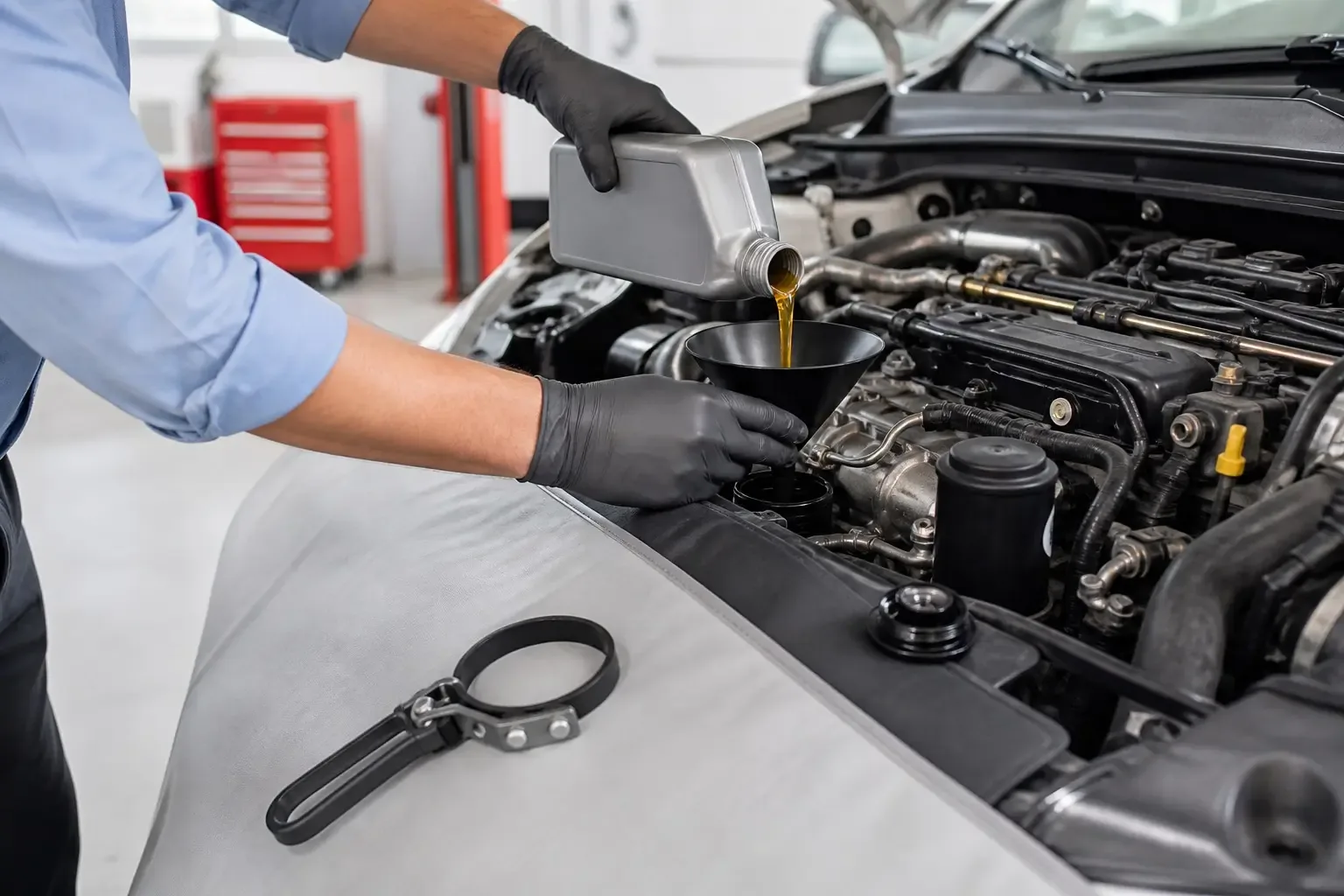
- It is always replaced with the oil: leaving the old filter immediately contaminates the fresh oil. We pay attention to two commonly mishandled details: lubricating the sealing ring before installation and tightening the filter by hand with the correct force. An overtightened filter is difficult to remove next time and its mounting can be damaged; an undertightened filter leaks. On engines with cartridge filters, we always replace every seal in the kit and observe the specified housing-cap tightening torque.
Additional checks
- Sealing ring — lubricated before installation
- Housing-cap tightening torque — for cartridge-type filters
Why it matters
An overtightened filter is hard to remove next time and can damage the mounting boss; an undertightened one leaks. Cartridge-type filters need every seal in the kit replaced.
More details
The oil filter traps wear particles and carbon deposits that would otherwise travel through the oil galleries to the bearings and the turbo. It's always replaced together with the oil — leaving the old filter in place means contaminating the fresh oil right away. We pay attention to two details that are most often gotten wrong: greasing the O-ring before installation and hand-tightening the filter to the correct torque. An overtightened filter is hard to remove next time and can damage the mounting surface; an undertightened one leaks. On engines with a cartridge-type filter we always replace every seal in the kit and follow the correct tightening torque for the housing cap.
Need a Technician Consultation?
Describe the vehicle and symptoms, and we will suggest which check to start with.
Book a Diagnostic