
Power steering (hydraulic) replacement
Power steering makes the wheel easier to turn, and its failure is felt immediately: steering becomes heavy, especially at low speed and while parking.
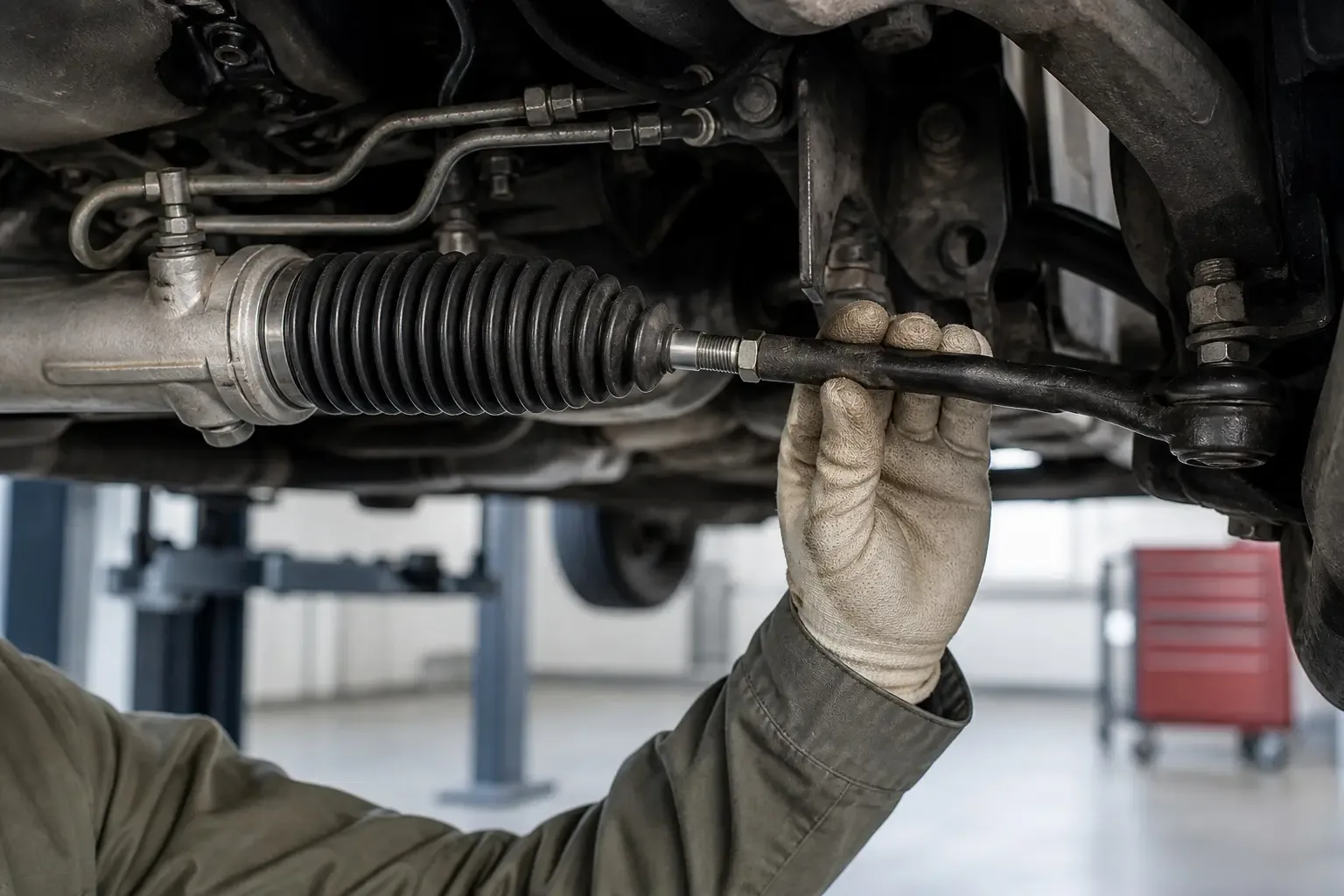
Symptoms
- Steering gets heavy, especially at low speed and while parking.
What's included
- Causes range from a low level or contaminated fluid to pump wear and leaks in the rack itself. Before replacing the unit, we find the source of the issue by checking system pressure, belt condition, fluid cleanliness and leaks. Power-steering replacement includes flushing the lines: remnants of old fluid with metal particles can damage the new unit. After installation, we bleed the system and check operation at different steering angles.
Why it matters
Before replacing the unit, pressure, belt, fluid, and leaks are checked — the source of the problem isn't always the pump itself. Replacement always includes flushing the lines.
More details
Power steering makes turning the wheel easier, and its failure is felt right away: the steering becomes heavy, especially at low speed and while parking. The causes vary — from a low or contaminated fluid level to a worn pump or a leaking rack. So before replacing the unit, we find the source of the problem: we check the system pressure, the belt condition, the cleanliness of the fluid, and whether there are any leaks. Replacing the power steering unit includes flushing the lines: leftover old fluid with metal debris kills a new unit within a few thousand kilometers. After installation we bleed the system and check its operation at different steering angles.
Need a Technician Consultation?
Describe the vehicle and symptoms, and we will suggest which check to start with.
Book a Diagnostic