
Turbo actuator replacement
The actuator controls the turbocharger geometry or wastegate, setting the required boost pressure.
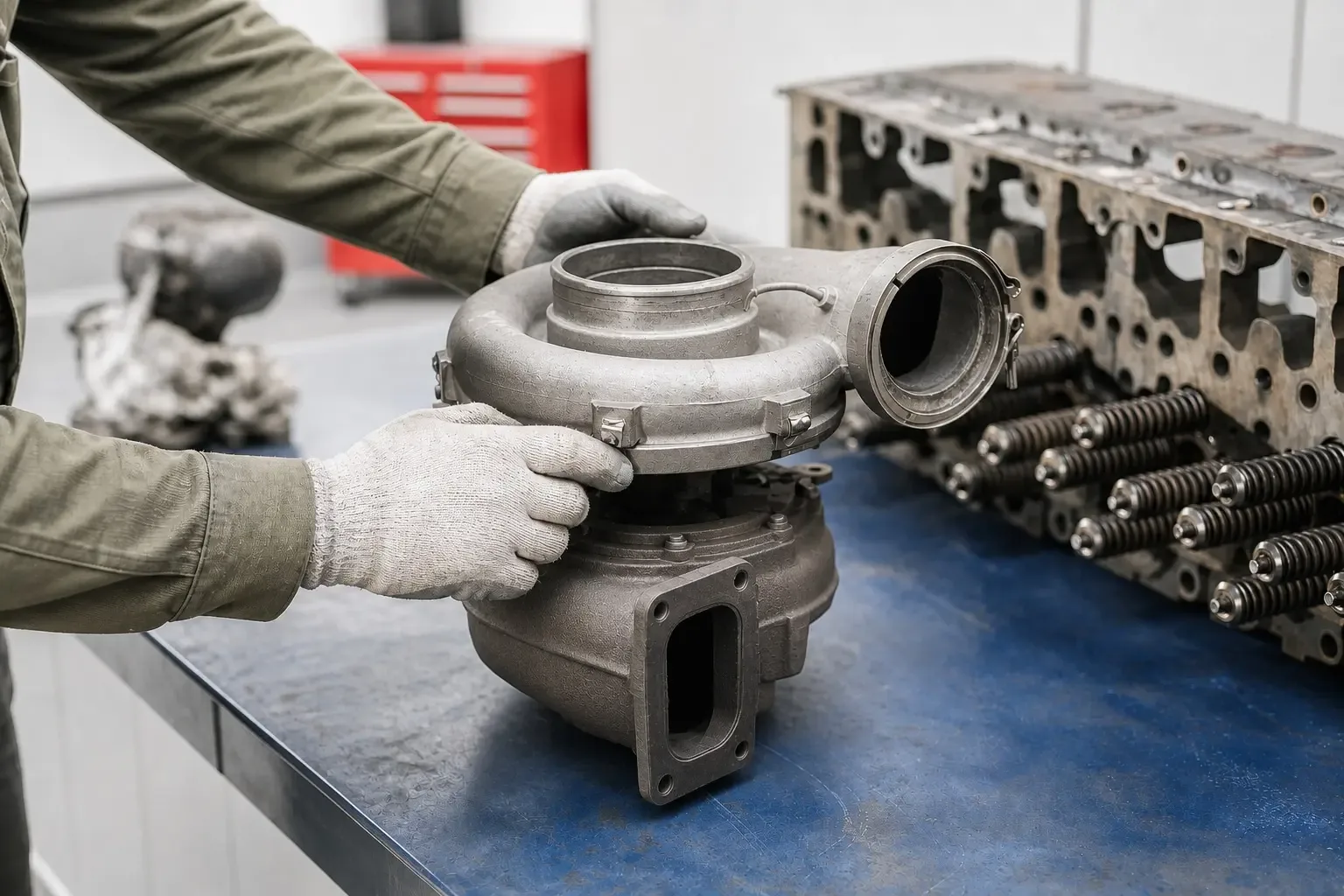
Symptoms
- Boost pressure faults, limp mode, power that comes and goes.
What's included
- When it sticks or loses accuracy, boost-related faults appear, the vehicle enters limp mode, and power comes and goes. Often the mechanism is simply coked with soot and can be restored without replacing the entire turbocharger. We test actuator operation under pressure and compare the commanded position with the actual one in live data. Electronic actuators require scanner calibration after replacement; otherwise the control unit keeps using the old values and the fault can reappear.
Additional checks
- Actuator operation tested under pressure
- Commanded vs actual position in live data
Why it matters
The mechanism often just gets clogged with soot and can be restored without replacing the whole turbo. Electronic actuators need scan-tool calibration after replacement, or the fault comes right back.
More details
The actuator controls the turbo's variable geometry or the wastegate valve, setting the required boost pressure. When it seizes or loses precision, boost-related fault codes appear, the car goes into limp mode, and power comes and goes. Often the mechanism is simply coked up with soot and can be restored without replacing the whole turbo. We check the actuator's operation under pressure and compare the commanded position with the actual one in the live data. Electronic actuators always need scanner calibration after replacement — without it the control unit keeps using the old values, and the fault reappears the very next day.
Need a Technician Consultation?
Describe the vehicle and symptoms, and we will suggest which check to start with.
Book a Diagnostic