
Cooling system flush
Flushing is needed when scale, rust or old-antifreeze breakdown products have accumulated in the system, and after oil or exhaust gases enter the circuit, for example through a blown cylinder-head gasket.
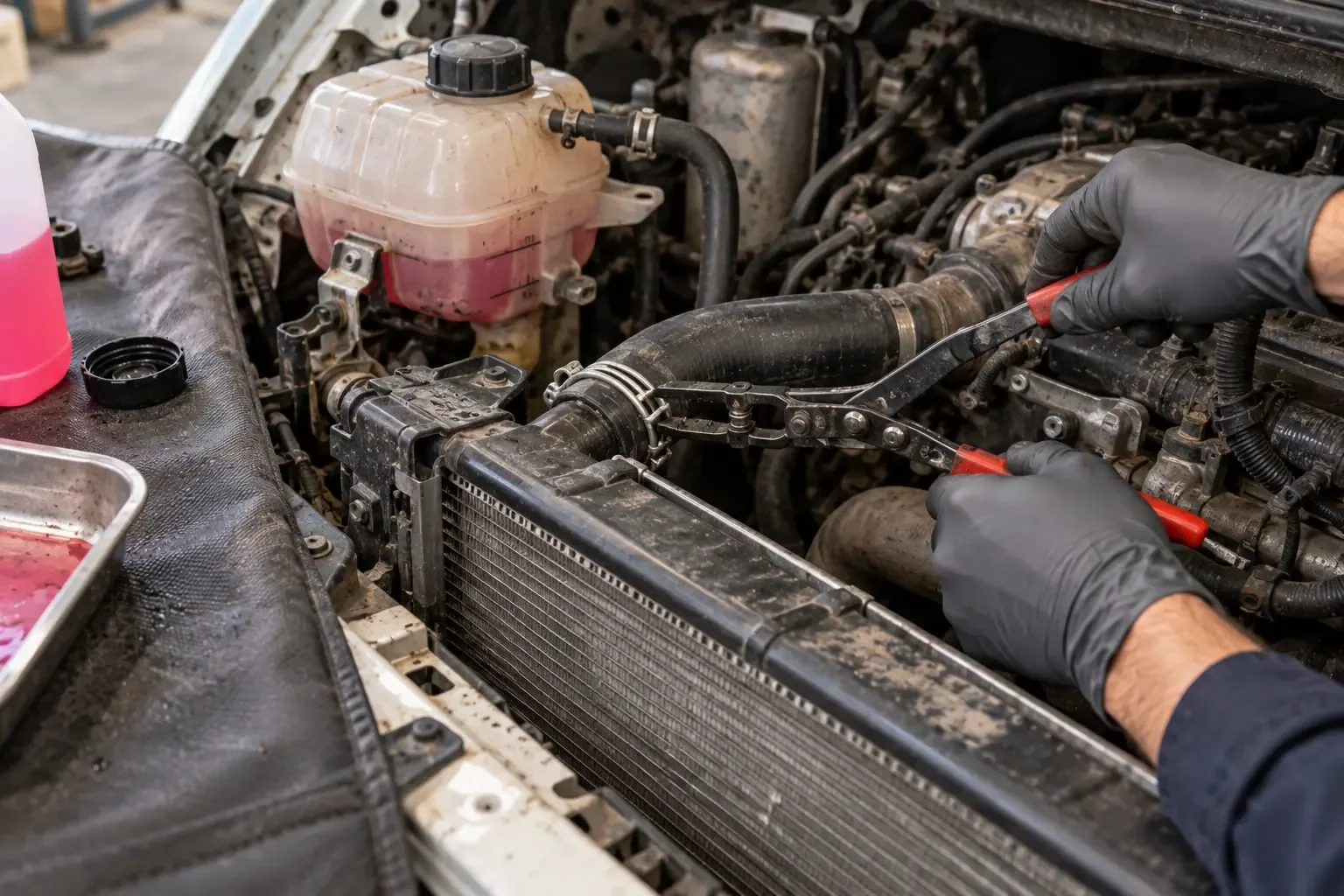
Symptoms
- Weak heater output, jumpy temperature, sediment in the tank, uneven radiator heating.
What's included
- Signs of contamination include weak heater output, fluctuating temperature, sediment in the reservoir and uneven radiator heating. We flush the system with a special compound and verify the result rather than using only water, then fill it with fresh antifreeze. We also assess the heater core, which clogs first because of its narrow channels; flushing can sometimes avoid replacement.
Additional checks
- Cause of contamination — scale, rust or old-antifreeze breakdown products
- Oil or exhaust gases entering the cooling circuit (for example through a blown cylinder-head gasket)
Why it matters
Flushing with a dedicated solution and checking the result works better than plain water. The heater core clogs first because of its thin channels, and flushing sometimes saves it from replacement.
More details
Flushing is needed when scale, rust, or the breakdown products of old coolant have built up in the system, and it's mandatory after oil or exhaust gases have gotten into the circuit — for example, after a blown head gasket. Signs of a contaminated system include a weak-blowing heater, fluctuating temperature, sediment in the tank, and a radiator that heats unevenly. We flush the system with a special compound and check the result, rather than just using water, and then refill it with fresh coolant. At the same time we assess the condition of the heater core — it's the first to clog because of its narrow channels, and a flush sometimes saves it from replacement.
Need a Technician Consultation?
Describe the vehicle and symptoms, and we will suggest which check to start with.
Book a Diagnostic