
Pre-alignment inspection
Alignment adjustment only makes sense when the chassis is sound; otherwise the rig will show good figures that disappear after the first pothole.
Symptoms
- Play in the ball joints, worn shocks, or uneven tire pressure will throw off the alignment result.
What's included
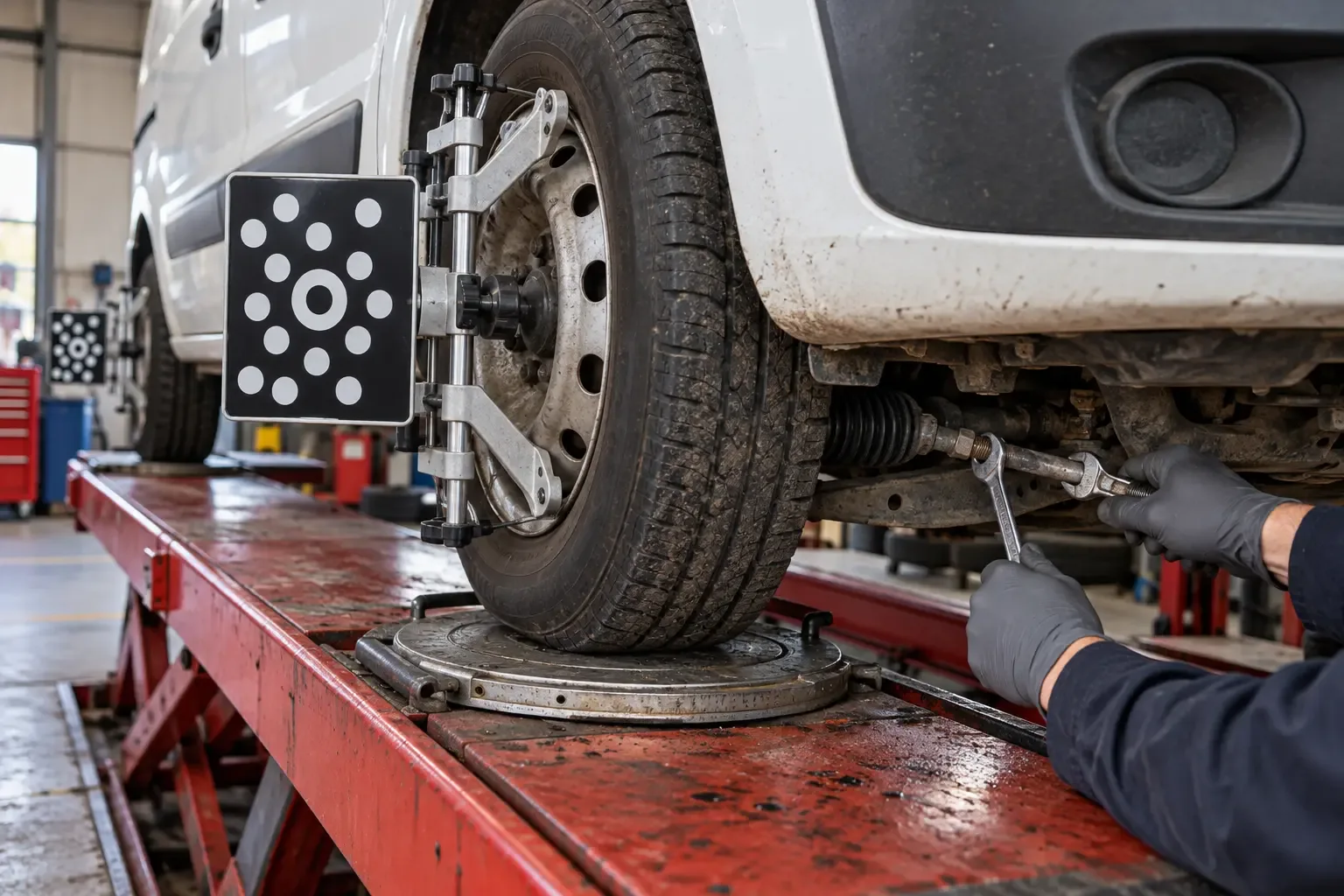
- Before wheel alignment, we carry out a preparation check: play in ball joints, steering ends, suspension bushes and hub bearings; the condition of shock absorbers and springs; tyre pressure; and tyres for uneven wear or different sizes. We also check whether control arms and wheels are deformed, because a bent wheel produces an error the alignment rig reads as an incorrect angle. The preparation result shows what must be corrected before adjustment and what can remain.
Additional checks
- Play in steering ends and hub bearings
- Condition of the springs
- Uneven wear or mismatched tyre sizes
- Control arm deformation
Why it matters
Adjusting the angles only makes sense on a sound suspension — otherwise the rig shows nice numbers that vanish after the first pothole. A bent wheel throws off a reading the rig reads as a wrong angle.
More details
Adjusting the angles only makes sense on a suspension that's in good condition — otherwise the stand will show nice numbers that disappear after the first pothole. That's why before a wheel alignment we carry out a pre-check: we check for play in the ball joints, tie rod ends, bushings, and hub bearings, assess the condition of the shocks and springs, equalize the tire pressures, and inspect the tires for uneven wear and mismatched sizes. We separately check whether the control arms or wheels are deformed — a bent wheel introduces an error that the stand reads as an incorrect angle. Based on the pre-check results, you see what needs fixing before the adjustment and what can be left as is.
Need a Technician Consultation?
Describe the vehicle and symptoms, and we will suggest which check to start with.
Book a Diagnostic