
Oil leak detection & repair
Finding the source of an oil leak is harder than it seems: airflow spreads oil, and a wet area underneath is often far from the real problem.
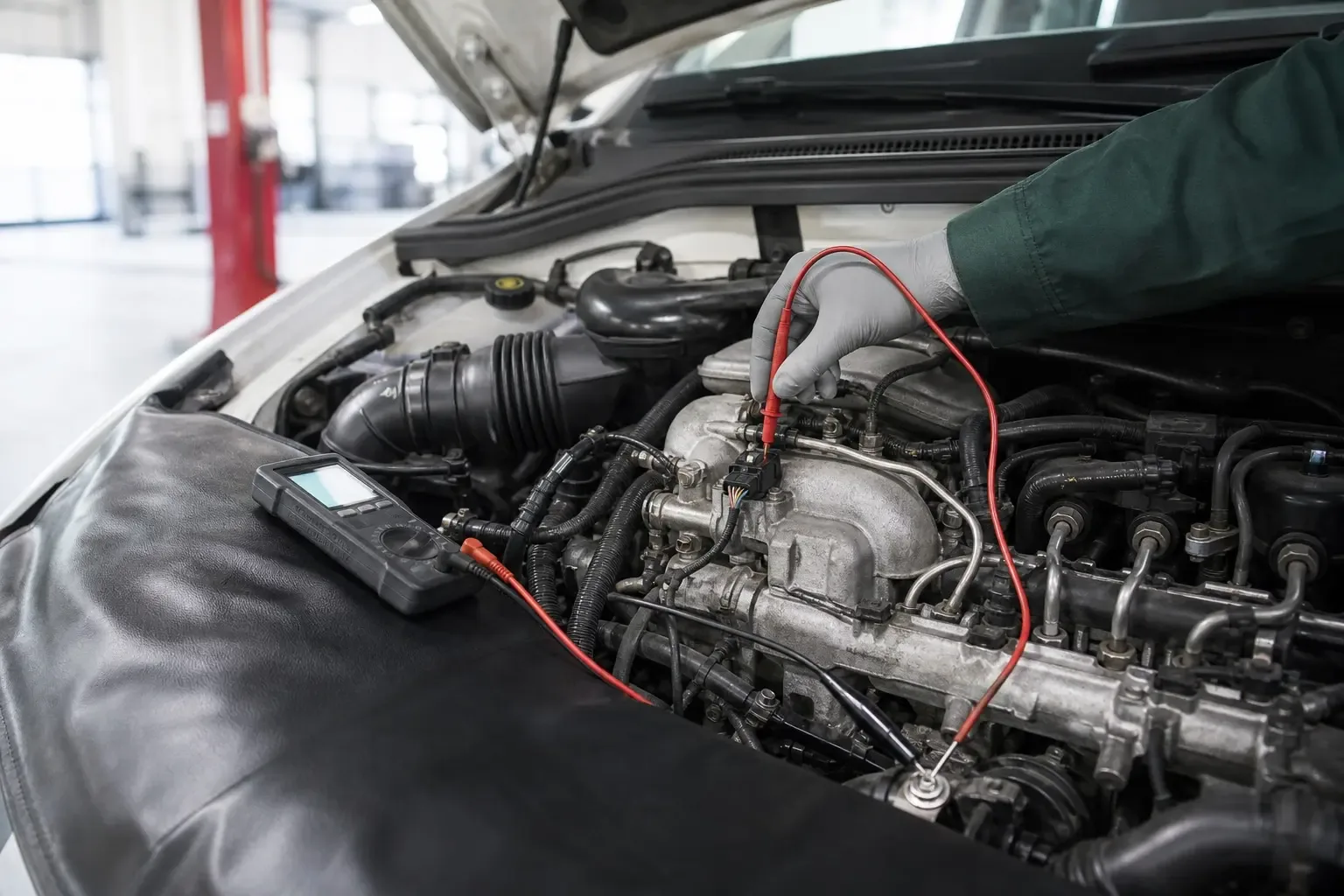
Symptoms
- A wet patch under the engine doesn't line up with the actual oil leak.
What's included
- We wash the engine and then inspect it with a UV additive or in stages after driving, which shows the real exit point. Common sources are the valve-cover gasket, crankshaft and camshaft seals, sump gasket, and oil-filter and sensor seals. Sometimes the cause is not a seal at all but high crankcase-gas pressure from a clogged ventilation system; then replacing seals helps only briefly. We check this too.
Additional checks
- Valve-cover gasket
- Crankshaft and camshaft seals
- Sump gasket
- Oil-filter and sensor seals
Why it matters
Airflow spreads the oil, so inspection uses a UV additive or staged checks after a test drive. Sometimes the cause isn't a seal at all but clogged crankcase ventilation — replacing seals alone then only helps for a month.
More details
Finding the source of an oil leak is harder than it looks: oil spreads in the airflow, and a wet spot lower down is often far from the actual problem. We wash the engine, then inspect it using a UV dye additive or staged checks after a drive — this reveals the real point of exit. The most common culprits are the valve cover gasket, the crankshaft and camshaft seals, the oil pan gasket, and the oil filter and sensor seals. Sometimes the cause isn't a seal at all, but elevated crankcase pressure from a clogged ventilation system — in that case replacing the seals only lasts a month. We check for that too.
Need a Technician Consultation?
Describe the vehicle and symptoms, and we will suggest which check to start with.
Book a Diagnostic