
Fuel pressure test
Insufficient fuel pressure produces recognisable symptoms: difficult starting, hesitation under acceleration, jerks under load and limp mode.
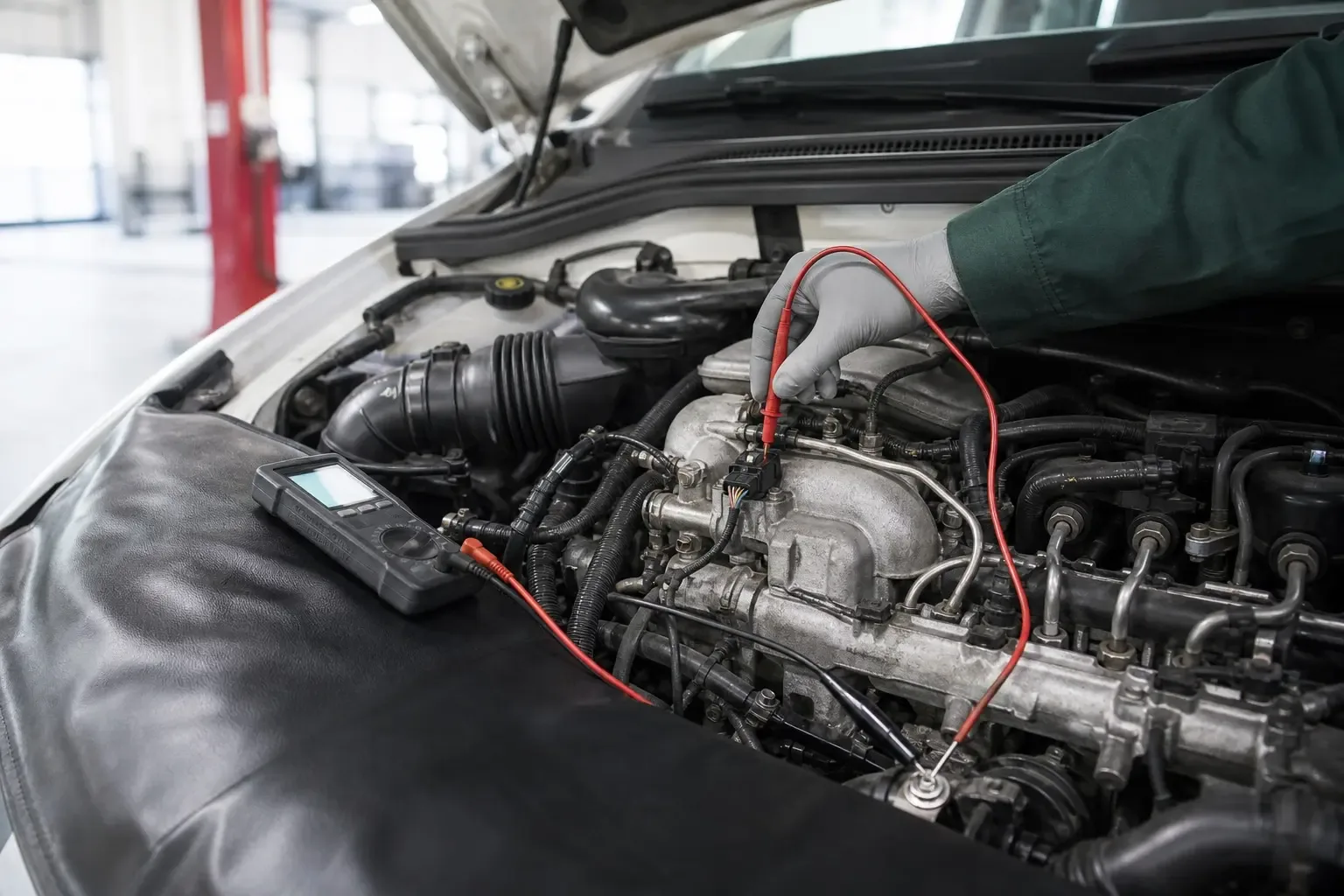
Symptoms
- Hard starting, hesitation on acceleration, jerking under load, entering limp mode.
What's included
- Several causes are possible: a worn pump, clogged filter, faulty pressure regulator, leaking injectors or a pump-wiring problem. We measure pressure with a gauge in different modes: during starting, at idle, under load and after the engine stops. The last check shows whether the system holds pressure or loses it through a leak. This measurement identifies the cause and avoids replacing a pump unnecessarily when the filter is clogged.
Additional checks
- Fuel pump wear
- Fuel filter condition
- Fuel pressure regulator operation
- Injector tightness
Why it matters
Readings at startup, idle, under load, and after shutdown show whether the system holds pressure. Pinning down the actual culprit saves money — replacing the pump "just in case" won't help if the filter is clogged.
More details
Insufficient fuel pressure produces a recognizable set of symptoms: hard starting, hesitation on acceleration, jerking under load, and the car going into limp mode. There are several possible causes — a worn pump, a clogged filter, a faulty pressure regulator, leaking injectors, or a problem with the pump wiring. We measure pressure with a gauge in different modes: on startup, at idle, under load, and after the engine is switched off — the last one shows whether the system holds pressure or it drops due to a leak. This kind of measurement points unambiguously to the culprit and saves money: replacing the pump "just in case" when the filter is clogged won't fix anything.
Need a Technician Consultation?
Describe the vehicle and symptoms, and we will suggest which check to start with.
Book a Diagnostic