
Diesel Engine Diagnostics
Diesel engine diagnosis connects the driver's complaint with actual operating data rather than stopping at fault-code reading. Difficult starting, uneven running or power loss can have a fuel, electrical or mechanical cause. We check relevant sensor signals, pressure control, accessible line sealing and engine response in appropriate operating modes. Findings determine the next measurements so parts are not replaced without evidence. You receive an explanation of the deviations and a proposed sequence for agreeing on repairs.
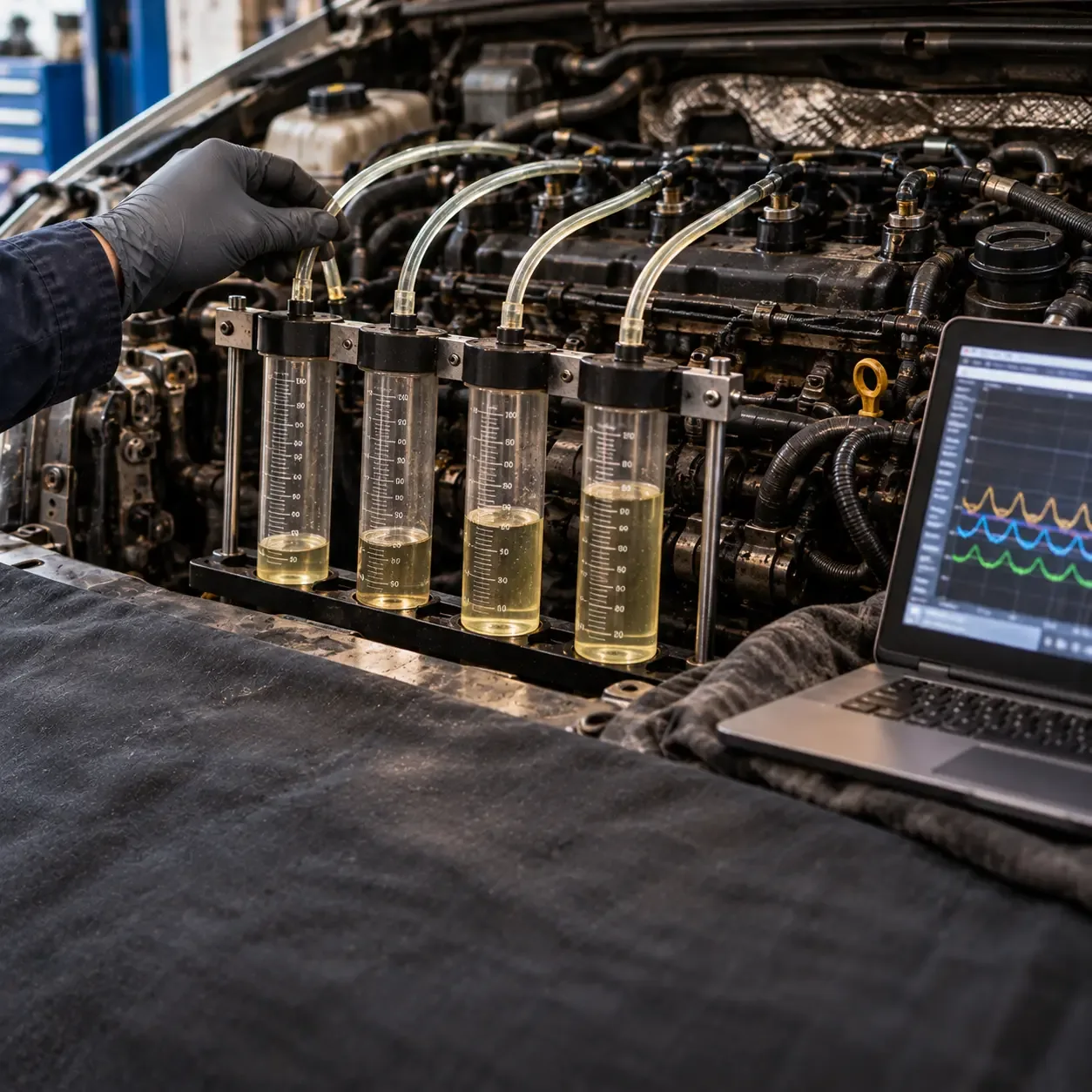
Symptoms
- Difficult starting, uneven running or engine stalling.
- Power loss or an engine fault message.
What's included
- Review the complaint, conditions and previous work.
- Check fault codes and relevant live operating data.
- Perform targeted checks of fuel lines, controls and engine response.
- Explain the findings and agree on the next stage.
Additional checks
- Electrical and mechanical causes — checked alongside the fuel system
- Justification for parts replacement — confirmed with additional measurements
- Previous work on the system — clarified before testing
Why it matters
The check covers pressure regulators, metering valves, rail sensors, and line integrity — a diesel fault rarely shows its cause through a single symptom. The engine is tested under load, not just at idle.
More details
Checks of pressure regulators, metering valves, rail pressure sensors, fuel line tightness, and engine operation under load.
How Injector Repair Works
A transparent process with checks at every stage
- Stage 1. Intake — We record the injector's number, configuration, external condition and the client's request.
- Stage 2. Initial cleaning — We remove external contamination so it doesn't get inside the component.
- Stage 3. Bench testing — We test the injector under conditions close to real engine operation.
- Stage 4. Report generation — We record the readings and identify deviations from acceptable parameters.
- Stage 5. Fault inspection — If needed, we disassemble the injector and assess the condition of internal components.
- Stage 6. Estimate — We prepare a list of required parts and give the client the exact cost.
- Stage 7. Approval — Repair only begins after the client confirms.
- Stage 8. Repair and adjustment — We replace faulty components, reassemble and adjust the injector.
- Stage 9. Verification test — We re-test the injector on the bench.
- Stage 10. Handover — We provide the test results, recommendations and warranty terms.
Need a Technician Consultation?
Describe the vehicle and symptoms, and we will suggest which check to start with.
Book a Diagnostic